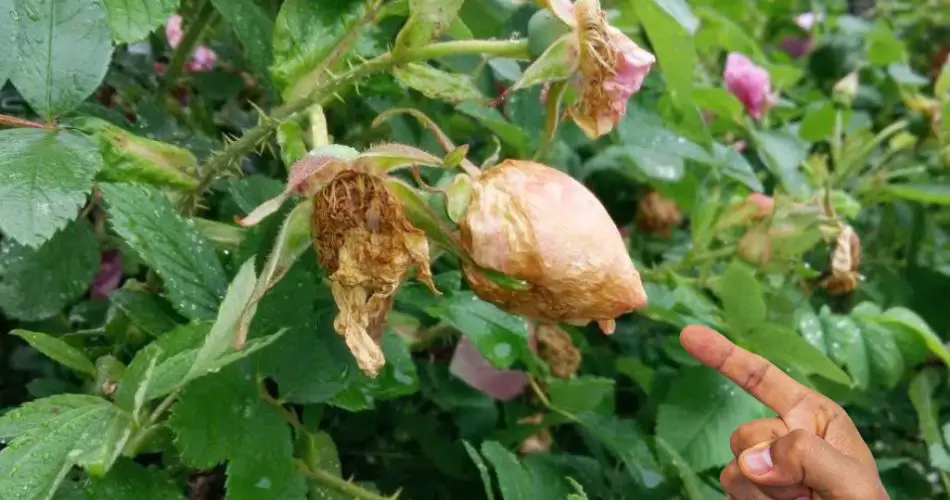
It’s not uncommon for rosebuds to form and then dry up before they have a chance to bloom. If you’re facing this issue with your rose bushes, understanding the possible causes and taking action can help prevent further damage and save your flowers. Here are the key reasons why this happens and how you can address them.
1. Constant Rainy Weather
Excess moisture from prolonged rainy weather can lead to oxygen deprivation in the soil, which affects the plants’ ability to absorb the nutrients they need.
- Solution: To prevent this, set up a film shelter over your rose bushes to protect them from excess rain. Loosen the soil around the base of the plants to improve air circulation and cover the soil with pine bark to retain moisture while allowing for proper drainage.
- Once the rains stop, open the shelter, and spray the bushes with boric acid to help the roses recover. To do this, dissolve 5 grams of boric acid in 10 liters of water and spray the solution on the plants.
2. Extended Heat
Heat stress from prolonged exposure to direct sunlight can cause rosebuds to form, but prevent them from opening, leading to delayed blooming and drying.
- Solution: To protect the plants from intense sun, cover the rosebushes with a shading net or other protective material. Also, increase watering to keep the soil cool and moist, helping the plants cope with the heat.
3. Sharp Temperature Fluctuations
Sudden changes in temperature can disrupt the normal bud formation process. Buds may fail to open, or they may wither and dry prematurely. This temperature stress can also make the plant more vulnerable to diseases.
- Solution: To counter this, feed your roses with a growth stimulator like Epin, which helps them recover from the stress of temperature fluctuations and supports overall plant health.
4. Improper Care and Maintenance
Other common causes of drying buds include improper care, such as insufficient or excessive watering, poor feeding practices, or the presence of pests and diseases.
- Solution: Ensure your roses receive the right amount of water—not too little, not too much—and follow proper fertilization guidelines. Regularly check for signs of diseases or pests, and take action immediately if you spot any issues.
By addressing these factors and providing the right care, you can help your roses thrive and ensure they produce beautiful, healthy blooms.