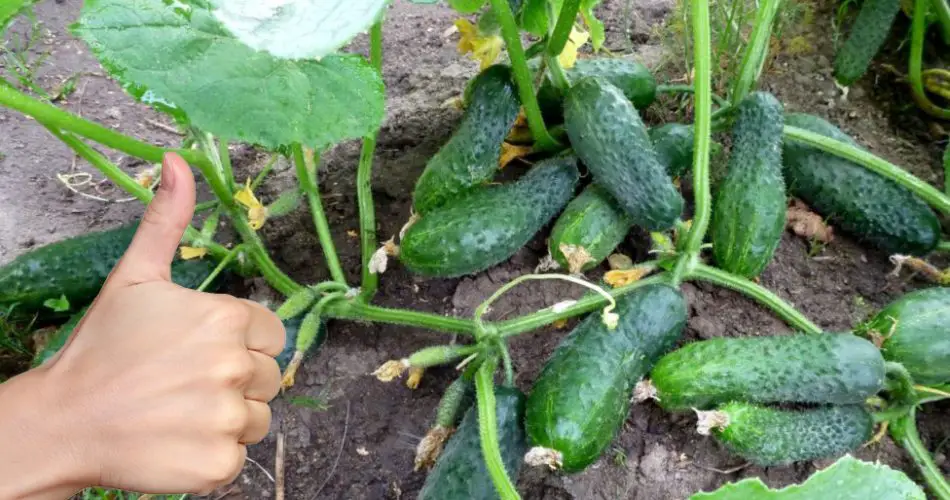
In July, the first wave of cucumber fruiting begins, signaling that it’s time to ramp up your care efforts. Proper attention to feeding, disease control, pest management, watering, and ventilation will ensure that your cucumbers thrive throughout the summer and continue to produce fruit well into the season.
Watering Cucumbers
Cucumbers are heavy feeders and need a lot of energy and nutrients to support their constant flowering and fruiting. To keep your cucumbers healthy, it’s crucial to water them frequently and at the right times:
- Water early in the morning or late in the evening, using warm water to avoid shocking the plants.
- For every 1 m² of garden area, apply 8-12 liters of water. Be careful not to let water get directly on the roots of the cucumber plants.
Feeding Cucumbers
As cucumbers grow and produce fruit, they require regular feeding to replenish essential nutrients like phosphorus, potassium, and trace elements. Feed your cucumbers at least 2-3 times during the peak growing and fruiting period:
- First feeding: Use 1 tbsp of nitrofoska per 10 liters of water.
- Second feeding (14 days later): Mix 1 tbsp of potassium sulfate, 0.5 liters of mullein, and 10 liters of water.
Preventive Measures for Pests and Diseases
Regularly check your cucumbers for pests and diseases and take preventive action to protect the plants:
- Iodine and milk solution: Mix 1 liter of warm homemade milk (or kefir, whey) with 30-40 drops of iodine tincture in 9 liters of water. Spray this mixture on the cucumber plants every 7-10 days to prevent diseases.
- Alternatively, treat cucumbers with a 0.4% soda solution mixed with liquid household soap.
- Use biological products like Sporobacterin, Bactofit, and Fitosporin-M to control diseases.
For aphids, which are carriers of many plant diseases, you can use a garlic and tobacco pollen mixture or a liquid laundry soap solution. If pests persist, use insecticides like Fitoverm or Bitoxybacillin.
Mulching Cucumbers
To protect the cucumber plants’ root system and maintain soil moisture, apply a thick layer of mulch. This can include:
- Straw, rotted humus, or peat.
- Alternatively, use mowed grass (without seeds) to prevent weed growth and help retain soil moisture.
Harvesting Cucumbers
To harvest cucumbers without damaging the plant, follow these guidelines:
- Do not turn the plant when harvesting to avoid harming the roots.
- For gherkin cucumbers, leave a small portion of the peduncle attached.
- Always remove damaged or diseased cucumbers to prevent the spread of pests and diseases.
- Harvest every 2-3 days to encourage continued production.
Caring for Cucumbers in August
In August, as the season progresses, you may notice yellowing leaves and spent whips drying up. Remove these promptly to prevent disease spread. You should also continue feeding and protecting the plants:
- Feeding: Mix 1 tbsp of potassium sulfate and superphosphate in a bucket of water. Alternatively, use a diluted solution of sour milk or whey (1:3 ratio).
- Weather fluctuations: In case of temperature changes or sudden weather, cover the cucumbers overnight with film or agricultural fiber to protect them from temperature extremes.
By following these care guidelines, your cucumbers will remain healthy, productive, and will provide you with fresh, crisp fruit all summer long.