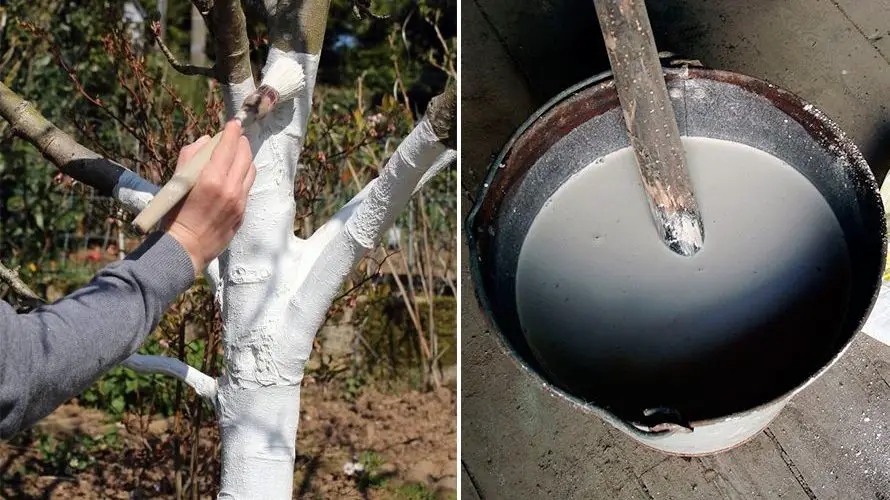
To ensure the health and protection of fruit trees during the cold winter months and early spring frosts, it’s crucial to apply a proper whitewash. This practice prevents damage caused by harsh winter weather and the chilly spring temperatures. The key to success is preparing the whitewash mixture correctly and ensuring it adheres well to the tree trunks.
Main Components of the Whitening Mixture
To achieve effective whitening, the right components are essential:
- Glue Component: This helps the whitewash adhere to the tree bark, ensuring it sticks properly without sliding off.
- Fungicide: Prevents diseases and pests. Common options include copper sulfate, Bordeaux mixture, or preparations like HOM and OXYHOM, which help control fungal growth.
Whitening Recipes to Protect Trees
Here are some effective recipes for making whitewash, with variations depending on the desired outcomes, such as disease control or protection from rodents.
Whitening Recipe with Fungicide
- Ingredients:
- 2.5 kg of slaked lime
- 10 liters of water
- 0.5 kg of copper sulfate dissolved in hot water
- 200 ml of heated wood glue
- Instructions:
- Dissolve the slaked lime in water.
- In a separate container, dissolve the copper sulfate in hot water.
- Add the copper sulfate mixture to the slaked lime solution, followed by the wood glue.
- Mix thoroughly until the consistency resembles thick sour cream.
Whitening Recipes for Rodent Control
Recipe #1:
- 2 kg of slaked lime (fluff)
- 10 liters of water
- 0.5 kg of copper sulfate
- 1 tbsp of carbolic acid
- 30 g of grated soap
- 1 kg of creature rot (manure)
Instructions:
Add each ingredient one by one, stirring vigorously until the mixture becomes thick.
Recipe #2:
- 2-2.5 kg of slaked lime
- 10 liters of water
- 300 g of copper sulfate
- 1 kg of red clay
- 50 g of creolin
Instructions:
Mix all the ingredients thoroughly until well-combined.
Recipe #3:
- 1 kg of ready-made wood whitening
- 1 bucket of cow manure
- 50 g of birch tar
- Water (as needed to achieve thick sour cream consistency)
Instructions:
Dissolve the ingredients in water until the consistency resembles thick sour cream.
When to Apply the Whitewash?
It is recommended to apply the whitewash in late spring, when the temperature is still around +5°C. If the weather is cold, wait for temperatures to rise above zero. Applying whitewash at this time will help protect your trees from the harsh sun and extreme weather, ensuring their health through the winter and into the spring.
Conclusion
Properly preparing and applying whitewash to your fruit trees is essential for ensuring they survive the cold winter months and thrive when spring arrives. By following these guidelines and using the right ingredients, you can protect your trees from both frost and diseases, guaranteeing a healthy harvest in the future.