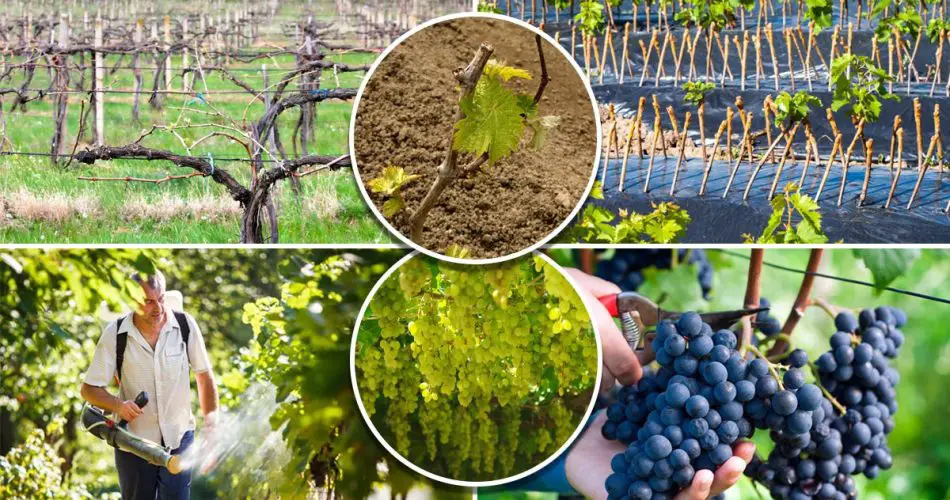
Spring is a critical time for grapevines as they emerge from their winter dormancy. Proper care during this period is essential to ensure robust growth and a bountiful harvest of delicious grapes. Here’s a comprehensive guide to the main rules of grape care in spring, covering pruning, spraying, and watering.
Opening of Grapes in Spring
As the temperature warms up, it’s crucial to gradually remove the shelter from grapevines to help them adapt to the changing conditions.
- Start Slowly: Begin removing the shelter from the bottom in the first half of March. This gradual exposure helps the plants acclimate and reduces stress from sudden temperature changes.
- Monitor Temperature: Once temperatures consistently stay above +10°C, you can completely remove the film or cover.
- Adaptation: Ensure that the vines have enough air circulation to prevent mold and other issues.
Grape Pruning in Spring
Pruning is essential for maintaining vine health and optimizing fruit production. Conduct pruning once the threat of frost has passed.
- Timing: Prune when the night temperatures are consistently above +5°C.
- Tools: Use well-sharpened secateurs to minimize damage to the vines.
- Pruning Strategy:
- First Three Years: Cut back most branches, leaving only 2-3 of the strongest shoots to develop the structure of the vine.
- Subsequent Years: Focus on removing diseased, dry, and weak branches, retaining only the healthiest and strongest vines.
- Benefits: Proper pruning enhances yield, reduces shading, and ensures better airflow around the berries.
Spraying Grapes in Spring
Spraying is crucial for protecting grapevines from diseases and pests, ensuring their overall health.
- Initial Treatment: After removing the shelter, treat the vines with a solution of iron sulfate to prevent diseases and promote vine health.
- Follow-Up Treatments: Once the first green leaves appear, use universal insecticides to control pests. Complete all chemical treatments before the grapes begin to bloom.
- Alternative Sprays: Consider using permethrin, Bordeaux liquid, colloidal sulfur, soap solution, or nitrafen for additional disease protection.
- Timing: Ensure treatments are applied early to avoid interfering with the flowering process.
Watering Grapes in Spring
Watering is essential to support vine growth and development throughout the spring.
- Pre-Bud Swelling: For adult bushes, apply about 10 buckets of water to ensure adequate moisture before buds swell. Young plants require 2-4 buckets.
- Second Watering: Conduct a second watering in early May. Avoid overwatering to prevent ovary drop and ensure proper fruit development.
- Moisture Management: Balance watering to maintain soil moisture without creating conditions conducive to disease.
Conclusion
Spring care for grapes involves careful attention to pruning, spraying, and watering to foster healthy growth and ensure a rich harvest. By following these guidelines, you’ll set your grapevines up for a successful growing season and a plentiful crop of delicious grapes. Proper care during this pivotal time will lead to thriving vines and a rewarding harvest in the coming season.