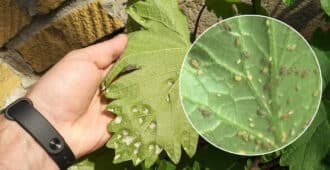
- Appearance: Clusters of small green or black insects on the undersides of leaves.
- Symptoms: Sticky honeydew residue, leaf twisting and deformation, slowed growth, and decreased crop production.
- Choose Resistant Varieties: Opt for grape varieties known to be resistant to aphids when planting.
- Good Agricultural Practices: Maintain proper techniques such as timely watering, fertilization, pruning, and berry thinning.
- Cleanliness: Regularly remove weeds, fallen leaves, and debris to eliminate aphid habitats.
- Herbal Infusions: Use chamomile, calendula, garlic, or tobacco infusions to treat grapes.
- Soap Solution: Mix 200 g of household soap in 10 liters of water to create an effective aphid deterrent.
- Ash Water: Prepare an infusion of ash (300 g per 10 liters of water) to help eliminate aphids.
- Insecticides: Use chemical insecticides as a last resort, following manufacturer instructions carefully.
- Biological Controls: Employ beneficial insects like ladybugs and goldenrods to naturally reduce aphid populations.
- Read Instructions: Always read and adhere to instructions when using any aphid control method.
- Weather Conditions: Apply treatments during dry, windless weather for optimal effectiveness.
- Timing: Avoid using chemical insecticides during grape flowering and fruiting stages.
Show Comments