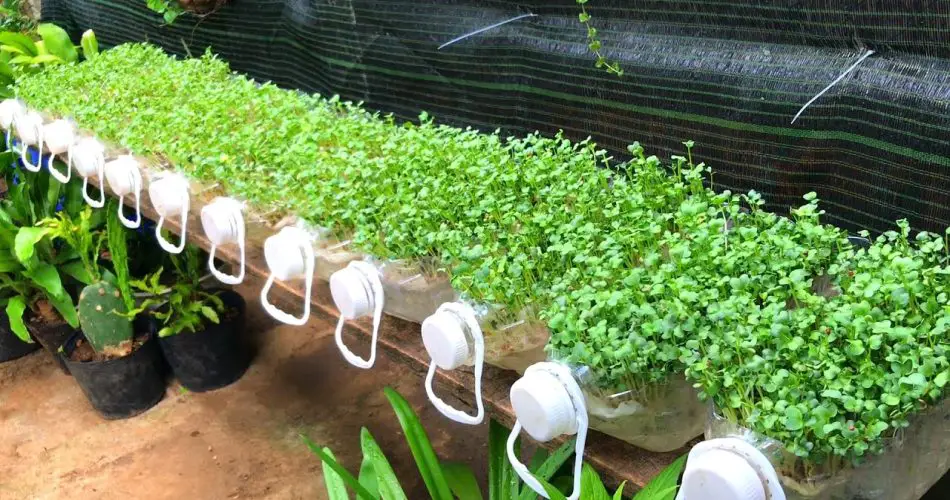
Repurposing plastic bottles for growing sprouts is a sustainable and innovative way to reduce waste while producing fresh vegetables at home. This method not only promotes environmental conservation but also allows you to enjoy nutrient-rich sprouts right from your kitchen.
Preparing the Plastic Bottles
- Selecting Bottles: Choose clean, transparent plastic bottles with wide mouths. Remove labels and wash thoroughly with soap and water.
- Cutting and Preparing: Cut the bottles horizontally, leaving the bottom part intact to create a shallow tray. Poke small drainage holes in the bottom for water drainage.
Planting Sprouts
- Choosing Seeds: Select seeds suitable for sprouting, such as alfalfa, broccoli, or mung beans. Rinse the seeds and soak them in water for the recommended time to initiate germination.
- Planting: Spread a thin layer of moistened potting soil or sprouting medium in the bottom of the bottle tray. Scatter the soaked seeds evenly across the surface.
Caring for Sprouts
- Watering: Mist the seeds lightly with water to keep the medium moist. Avoid overwatering to prevent mold or fungal growth.
- Light and Temperature: Place the bottles in a bright location with indirect sunlight. Maintain a consistent temperature suitable for sprout growth.
Harvesting Sprouts
- Growth Period: Sprouts typically mature within a few days to a week, depending on the variety. Rinse them gently under running water before consumption.
Benefits of Plastic Bottle Sprouting
- Sustainable Gardening: Repurposing plastic bottles reduces landfill waste and promotes resource efficiency.
- Convenient and Cost-effective: Growing sprouts at home saves money and ensures a constant supply of fresh, nutrient-dense greens.
- Educational: Engage in hands-on learning about sustainable practices and the lifecycle of plants with children and family members.
Conclusion
By embracing the practice of growing sprouts in plastic bottles, you contribute to environmental sustainability while enjoying the benefits of fresh and healthy vegetables. Follow these simple steps to transform plastic waste into a thriving mini-garden of nutritious sprouts, enriching your diet and reducing your ecological footprint.
Show Comments