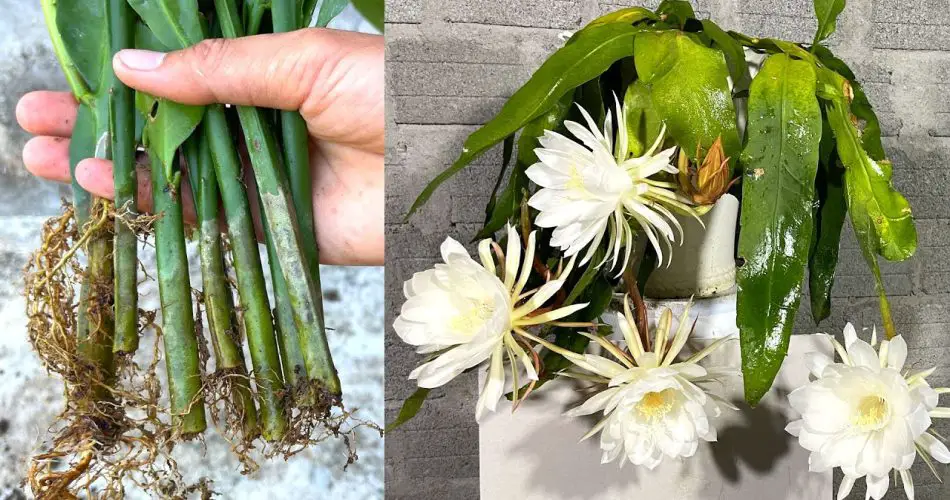
Night Blooming Cereus, also known as Quynh flowers, are renowned for their stunning nocturnal blooms that perfume the air with their intoxicating fragrance. While they require patience and specific care, successfully growing these ethereal flowers can be deeply rewarding for any gardening enthusiast.
Choosing the Right Conditions
- Light: Night Blooming Cereus thrives in indirect sunlight during the day but needs complete darkness at night to trigger flowering. Place them in a location with bright, filtered light during the day and ensure they are shielded from artificial light sources at night.
- Temperature: These plants prefer warm temperatures between 60-70°F (15-21°C) during the growing season. Avoid exposing them to drafts or sudden temperature fluctuations.
Planting and Care
- Soil: Use a well-draining potting mix that retains some moisture but does not become waterlogged. A mix formulated for cacti and succulents works well.
- Watering: Water sparingly, allowing the soil to dry out slightly between waterings. Overwatering can lead to root rot. Reduce watering during the winter months when growth slows.
- Fertilization: Feed with a balanced liquid fertilizer diluted to half strength every 4-6 weeks during the growing season (spring and summer). Avoid fertilizing during fall and winter.
Encouraging Blooms
- Pruning: Prune back leggy growth to encourage branching and more prolific flowering.
- Environmental Cues: Mimic natural conditions by maintaining a consistent day/night cycle and providing a period of darkness to induce blooming. This is crucial for Night Blooming Cereus to produce their spectacular flowers.
Enjoying the Blooms
- Blooming Season: Night Blooming Cereus typically bloom from late spring to early fall. Be patient, as flowers may take several years to appear on young plants.
- Fragrance and Beauty: Experience the mesmerizing beauty and sweet fragrance of Quynh flowers during their brief but memorable nighttime displays.
Conclusion
Growing Night Blooming Cereus, or Quynh flowers, requires attention to specific environmental conditions and patience for the reward of their breathtaking nocturnal blooms. By providing the right care and environmental cues, you can cultivate these enchanting flowers and create a magical nighttime garden experience.