Gardeners have varying methods for winterizing roses, ranging from simple mulching to elaborate protective structures. The approach you choose depends on the type of rose, its winter hardiness, and your local weather conditions. This guide will explain how and when to cover roses for winter, and which varieties might not require shelter.
Roses That May Not Need Winter Covering
Certain roses are quite hardy and can withstand winter with minimal protection. These include:
- Garden Roses
- Species Roses
- Rose Hips (such as nitida, glauca, wrinkled)
- Rose Hybrids (such as alba, rugosa, spinozissima)
- Hardy Varieties like ‘Hansa’, ‘Scabrosa’, ‘John Davis’, ‘Snow Pavement’, and ‘Jens Munch’
For these roses, a layer of mulch 15-20 cm thick, made from peat or compost, is generally sufficient.
When to Cover Roses
Cover roses when night temperatures consistently drop to -5°C, which typically occurs in late October or mid-November. Before applying any cover, treat the plants with a fungicide to guard against diseases.
Covering Techniques for Different Rose Types
- Bush Roses:
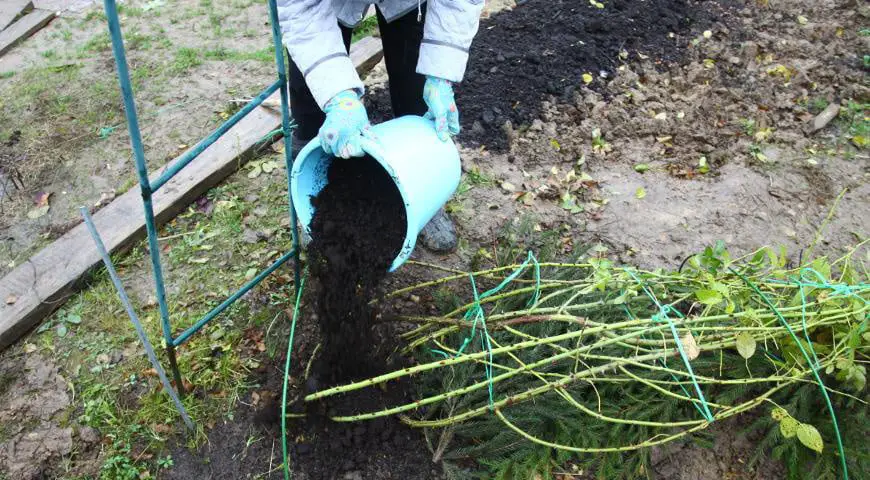
- Method 1: Pile mulch around the base and cover with dry leaves or spruce branches.
- Method 2: Roll up the base with mulch and top with dry leaves or branches.
- Climbing Roses:
- Pinch back shoots and remove leaves.
- Carefully bundle and cover with mulch and a protective layer of leaves or branches. Ensure the long stems are well protected from damage.
- Floribunda Roses:
- Prune the plants before winter.
- Cover with a layer of soil or peat after pruning.
- Standard Roses:
- Provide shelter but avoid pruning. A covering of mulch or soil should be sufficient.
- Ground Cover Roses:
- Typically, they don’t need shelter, but covering with spruce branches can offer additional frost protection.
- Rose Cuttings:
- Use a covering material and film for added protection. Remove these coverings in spring after the snow has melted.
By following these methods, you can ensure your roses remain healthy and vibrant throughout the winter, ready to flourish in the spring.