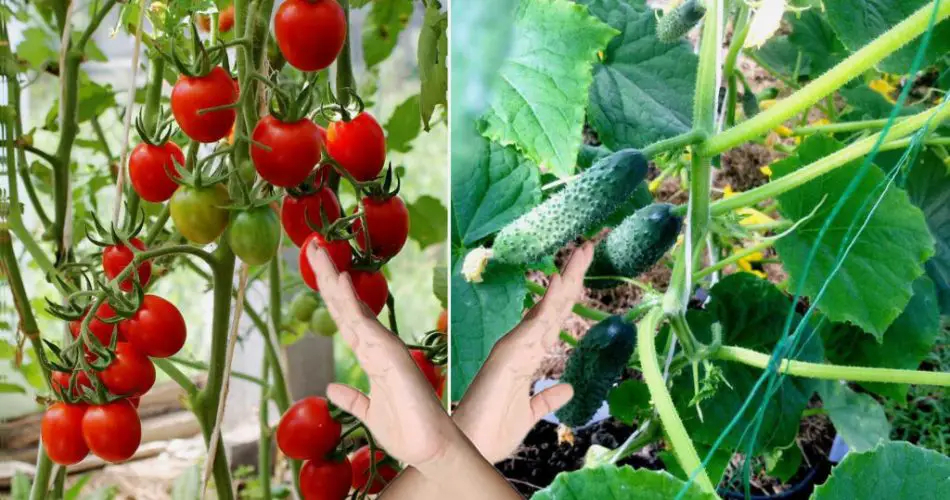
Cucumbers and tomatoes are two popular vegetables often grown in greenhouses. While they share some common needs, there are several significant differences that make them incompatible for cultivation in the same space.
1. Different Temperature and Humidity Requirements
Cucumbers and tomatoes have distinct temperature and humidity needs. Cucumbers thrive in warm conditions and do not tolerate temperature fluctuations or cold. They require daytime temperatures of 22-28°C and nighttime temperatures of 16-18°C. In contrast, tomatoes are more cold-resistant, tolerating temperatures as low as 10°C at night. They grow best at 20-25°C during the day and 12-15°C at night. Additionally, cucumbers need high humidity levels of 80-90%, while tomatoes prefer lower humidity, around 50-60%.
2. Different Pollination Methods
Cucumbers and tomatoes also differ in their pollination methods. Cucumbers are monoecious, having both male and female flowers on the same plant, and rely on insects or wind for pollination. Conversely, tomatoes are dioecious, producing only male or female flowers on individual plants, and are primarily self-pollinated or pollinated by shaking. Growing cucumbers and tomatoes together can lead to unwanted cross-pollination, resulting in small, deformed, or bitter fruits.
3. Different Planting and Harvesting Times
Cucumbers are early-season crops that can be planted in the greenhouse from April to May, yielding harvests in 40-50 days. They continue to produce fruit until autumn. In contrast, tomatoes are late-season crops, recommended for planting from May to June, taking 60-80 days to mature, and bearing fruit until frost.
If you attempt to grow cucumbers and tomatoes in the same greenhouse, you’ll need to manage their planting and harvesting schedules carefully. Improper placement can lead to shading, stunted growth, or even root rot.
Conclusion
To optimize yield and ensure fruit quality, it’s best to allocate separate greenhouses for cucumbers and tomatoes or divide one greenhouse into two sections using film or netting. This approach allows you to create suitable conditions for each crop, leading to tasty and healthy vegetables from your garden.