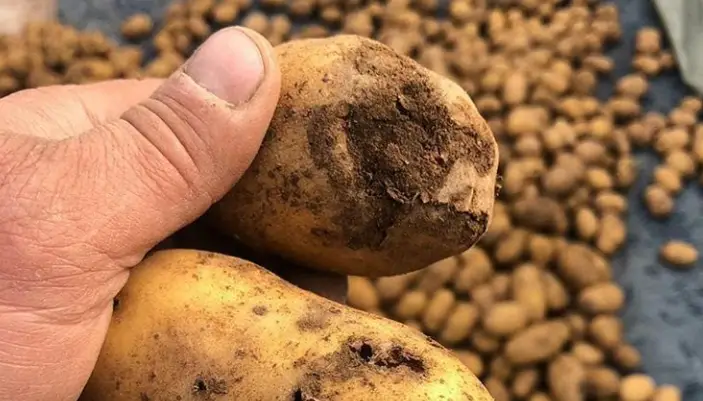
Potatoes are often susceptible to various diseases, and one of the most common culprits is late blight. This infection typically starts during the growth stage, and if not addressed, it spreads to the fruit, causing the shoots to rot and the potatoes to begin decomposing. After harvesting, the rot can continue in storage, especially in your basement. Here’s how to deal with common potato rotting issues:
1. How to Fight Late Blight
Late blight can cause potatoes to rot both in the garden and during storage. To help prevent further damage:
- Cure the Potatoes: Leave the harvested potatoes in a dark and cool place for about 21 days. The storage area should be well-ventilated to help the potatoes heal.
- Check for Rot: Over time, you will notice that the affected potatoes begin to darken and rot. These potatoes should be sorted out immediately.
- Remove Rotten Potatoes: As you go through the potatoes, discard any that are rotting to prevent the spread of disease.
- Store the Potatoes Properly: Once sorted, move the healthy potatoes to a cool, dry basement for long-term storage.
2. How to Fight the Potato Moth (Potato Mill)
The potato moth, or potato mill, is a pest that can thrive in the basement and damage your potatoes during storage. Here’s how to handle it:
- Spray the Walls: Before placing the potatoes in storage, spray the walls of your storage area with Fitoverm or Agrovertin to eliminate any pests.
- Treat the Potatoes: Newly harvested potatoes should be treated with Taboo or Prestige to prevent pest infestations.
- Check Regularly: Continue to check the potatoes in storage for any signs of infestation.
3. How to Fight the Dart (Wireworm)
Wireworms, also known as dart, are another common pest that can infect your potatoes. Here’s how to deal with them:
- Remove the Pest from the Garden: After harvesting, thoroughly dig up the garden bed to remove any pests. Add ammonium nitrate or ammonium sulfate to the soil to kill remaining larvae. You can also incorporate wood ash into the soil.
- Spring Treatment: In the spring, before planting, treat the soil with Provotox or Bazudin to prevent future infestations.
4. How to Fight Ring Rot
Ring rot is a hidden disease that usually becomes noticeable during storage. It causes dark rings inside the potato when cut. Here’s what to do:
- Identify the Disease: Ring rot is often not noticeable until you cut the potatoes. You will see dark black rings inside the flesh.
- Control Temperature: To slow the progression of ring rot, store potatoes at a temperature between 1°C to -2°C. Avoid storing them at around 20°C, as higher temperatures can make the disease spread more rapidly.
By addressing these common potato issues promptly, you can prevent rot and ensure your potatoes stay healthy in storage. Proper storage conditions, early intervention, and regular checks are key to keeping your crop safe.