There are two main types of garlic: winter and spring. Spring varieties are planted in the spring, while winter varieties are planted in autumn. Before planting garlic, it’s crucial to properly prepare the bed. Garlic will not thrive in poor soil that has been depleted by previous crops. To ensure good growth, you need to feed the soil in the fall. Here’s what fertilizers you should use during this period.
Fertilizer Concerns for Winter Garlic
Many gardeners worry about garlic freezing over the winter, which is why they often refer to a special planting calendar. However, if the wrong fertilizers are used, garlic can become vulnerable to frost damage.
What Fertilizers Should Not Be Applied in Autumn?
It’s important to avoid using fertilizers that contain nitrogen in the autumn. Nitrogen encourages top growth (the aerial part of the plant), which is not desirable before winter. Garlic should focus on rooting rather than growing shoots. If the garlic sends up flower stalks or scapes before winter, they will be vulnerable to frost and may die off.
Avoid the following fertilizers in autumn:
- Ammonium nitrate
- Urea
- Ammonium sulfate
- Calcium nitrate
- Sodium nitrate
While manure does contain nitrogen, it’s in a very small amount, so it can be used in moderation. Instead of nitrogen-rich fertilizers, focus on potash-phosphorus fertilizers to promote strong garlic growth and make it more resilient to winter conditions.
Organic and Mineral Fertilizers for Autumn Planting
Both organic and mineral fertilizers can be applied in the fall to improve soil quality for garlic planting.
Organic fertilizers include:
- Wood ash
- Compost
- Humus
- Manure (but not fresh manure)
Fresh manure or fresh humus should be avoided as they contain ammonia, which can harm garlic. Always use well-rotted manure and slightly dried humus.
How to Feed the Soil with Manure or Humus?
- Dig up the soil about 14 days before planting garlic.
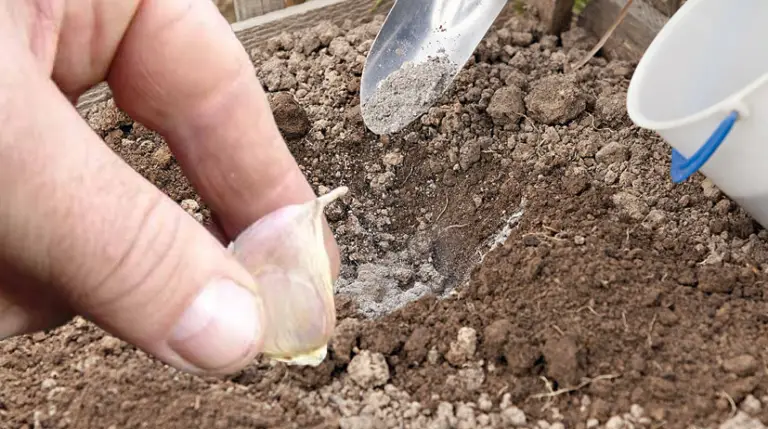
- Apply manure or humus while digging, and you can also add wood ash at this stage.
After about seven days, dig up the soil again and add mineral fertilizers, such as:
- Superphosphate
- Double superphosphate
- Potassium salt
- Phosphorus flour
- Potassium carbonate or potassium magnesium
For every 1 m², you’ll need approximately 500 grams of wood ash and cow dung.
When applying fertilizers, always follow the recommended dosages for best results.
Best Fertilizers for Root Feeding
For optimal root development, use the following fertilizers at the bottom of the planting bed:
- Phosphorus flour
- Superphosphate
- Potassium sulfate
- Potassium salt (Avoid potassium chloride, as garlic does not tolerate it well.)
Complex Fertilizer Mixes
You can also use a complex fertilizer mix, such as:
- 30 grams of granulated superphosphate, 20 grams of potassium salt, and a bucket of humus.
- 1 tablespoon of double superphosphate, 2 tablespoons of potassium sulfate, and 500 grams of wood ash per bucket of humus.
By carefully preparing your soil with the right fertilizers in autumn, you’ll set your garlic up for healthy growth and strong roots, ensuring a successful harvest.