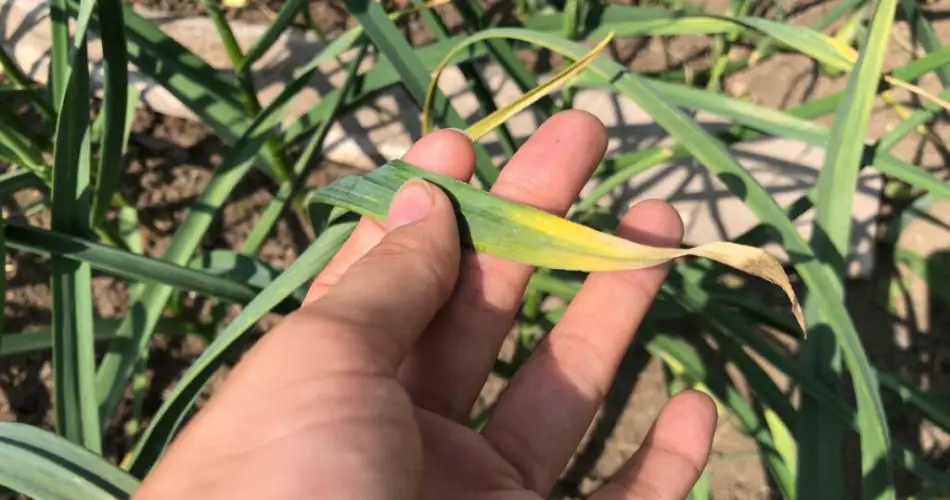
In the hot summer months, it’s common to notice that garden plants begin to wilt. This can happen due to high temperatures or the actions of pests. However, if the tips of garlic and onion leaves turn yellow prematurely, it usually indicates that the plants are lacking essential nutrients.
Here are some of the main reasons for this condition:
1. Sour Soil
If the soil is too acidic, it can lead to poor nutrient absorption. To correct this, dissolve 3 tablespoons of calcium nitrate in a bucket of water and pour 200 ml under each plant. Alternatively, dissolve a couple of glasses of ash in boiling water, then dilute the mixture in a bucket of water and apply it to the beds.
2. Nitrogen Deficiency
When onion leaves turn yellow or pale green with white tips, the plants are likely lacking nitrogen. To address this, dissolve 45 ml of ammonia in a bucket of water and spray it on the plants. Another option is to dissolve 3 tablespoons of calcium nitrate in a bucket of water and pour it over the beds.
3. Copper Deficiency
If the soil contains a lot of peat, the tips of garlic and onion leaves may turn white. To remedy this, dissolve 1 teaspoon of copper chloride in 5 liters of water. You can also use Bordeaux liquid or copper sulfate for treatment.
4. Potassium Deficiency
If the leaves yellow and begin to curl, the plants are lacking potassium. To correct this, dissolve 3 tablespoons of potassium chloride in a bucket of water. Apply 200 ml of the solution to each plant.
Application Tips:
- Always apply the solution in the evening to avoid the midday sun.
- If the weather is dry, make sure to moisten the soil before applying the solution.
By following these tips, you can ensure your garlic and onion plants remain healthy and produce a bountiful harvest. We wish you success!