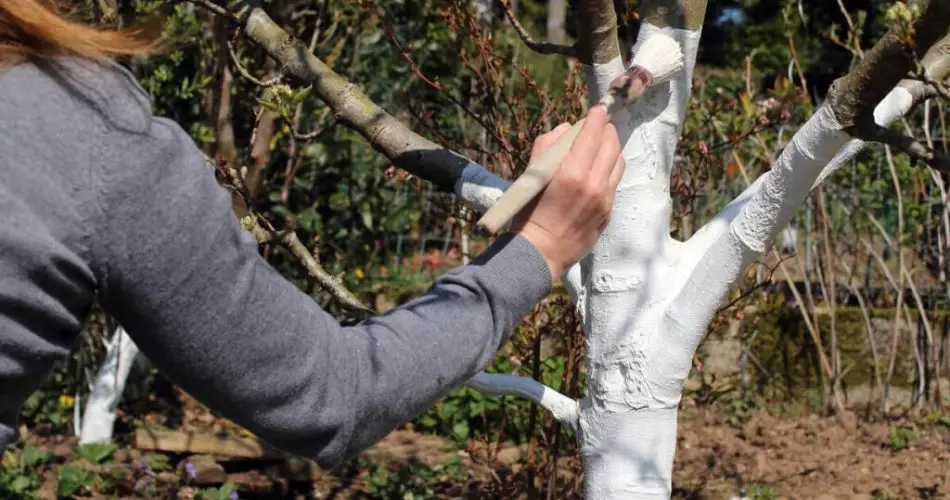
Experienced gardeners recommend whitewashing trees twice a year: in the fall to guard against frost and in the spring for vital reasons. Spring whitewashing is essential for protecting the bark from sunburn and preventing overheating, which can damage the bark and even lead to the death of the tree. Therefore, it’s crucial to perform the whitewashing procedure correctly, applying a white composition to the trunk and branches.
Importance of Spring Whitewashing
Spring whitewashing is an important procedure that shields trunks and branches from sunlight and insects that begin to consume the bark in spring. It is recommended to carry out this task in a month when daytime temperatures range from 11 to 15 degrees Celsius. Applying a white solution makes pests more visible to birds, which can help control their population. This process protects your garden from the harmful effects of spring conditions.
How to Whitewash Fruit Trees
When whitening fruit trees, use safe methods such as a lime solution, water-dispersion paint, or water-based emulsion. Each option typically contains white pigment, an adhesive base, and a fungicide. The white coating protects the tree from the sun and prevents infections from cracks in the bark.
Recipes for Tree Protein Solutions
The most popular method involves using a solution of lime or chalk. The auxiliary components can vary, but the base should always include white pigment and an adhesive base. Here are several recipes:
- Lime and Copper Sulfate Solution: Mix 10 liters of water, 3 kg of slaked lime or chalk, 500 g of copper sulfate, and 100 g of casein glue. Let the solution infuse for 5-7 hours before using.
- Lime, Clay, Manure, and Copper Sulfate Solution: Combine 10 liters of water, 2 kg of slaked lime, 1 kg of fat clay, 1 shovelful of manure, and 250 g of copper sulfate. Allow the solution to infuse for 2-3 hours before application.
- Copper Sulfate, Casein Glue, and Clay Solution: Mix 2 liters of water, 300 g of lime, 2 tablespoons of copper sulfate, 200 g of stationery glue, 200 g of clay, and 25 g of Karbofos.
- Copper Sulfate and Casein Glue Solution: Combine 2 liters of water, 400 g of copper sulfate, 100 g of casein glue, and 2 kg of slaked lime, then dilute this mixture in 8 liters of water.
Why Lime is a Safe Option
There is a common misconception about using lime for whitewashing trees. Lime is actually safe, but it needs to be renewed each season since the coating can wash off quickly. Water-dispersion paint or water-emulsion paint offers a longer-lasting solution and requires less frequent replacement.
Step-by-Step Instructions for Spring Whitewashing
If you didn’t whitewash the trees in the fall, follow these steps for proper preparation before starting in the spring:
- Clean the Tree: Remove old dead bark. Place oilcloth under the trunk and carefully scrape away remnants with a wooden spatula.
- Treat with Copper Sulfate: Apply a solution of copper sulfate in the morning, allowing it to dry by evening.
- Seal Cracks: Mix 200 grams of clay, 100 grams of mullein, and a handful of straw, diluting with water to achieve a sour cream-like consistency. Apply this mixture to any cracks in the trunk.
- Proceed to Whitewashing: Prepare your whitewash solution and apply it evenly to the tree. Ensure the layer is 2-3 mm thick—not too thick to prevent peeling. Ensure the solution adheres to the trunk without running off.
Important Note: For young trees, use water-based emulsion instead of lime, as their delicate trunks can be easily damaged.
By following these guidelines, you can effectively protect your trees and promote their health this spring!