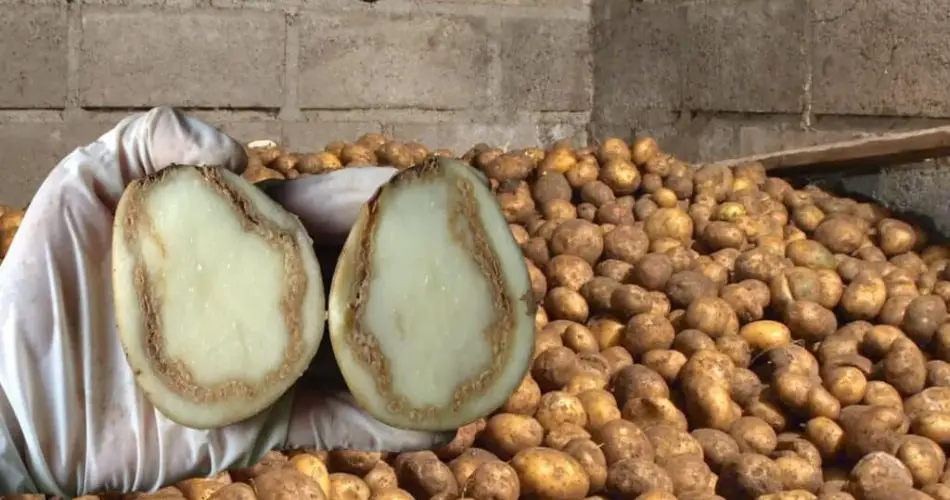
If your freshly harvested potatoes start to rot within a month, it could indicate the presence of late blight or other issues. This disease can persist even after the potatoes are picked and stored. To prevent further damage and ensure a healthy harvest, follow these effective methods:
Combating Late Blight
- Initial Storage: Keep the potatoes in a dark, cool room with good ventilation for 21 days. This allows affected potatoes to change color and begin to rot.
- Sorting: After the initial storage period, sort the potatoes and remove all rotten ones.
- Storage: Store the remaining healthy potatoes in the basement for long-term use.
Dealing with Potato Moth
- Basement Treatment: Before storing potatoes, treat the walls of the basement with Fitoverm or Agrovertin.
- Seed Potato Treatment: Use a Tabu or Prestige solution to treat seed potatoes.
- Regular Checks: Inspect potatoes regularly during storage to check for moth infestation.
Managing Wireworm
- Avoid Storage: If potatoes are infected with wireworm, do not store them, as the pest can cause significant damage.
- Garden Treatment: After harvesting, dig up the area and apply ammonium nitrate or ammonium sulfate. Add wood ash and lime to the soil.
- Soil Treatment: Before the next sowing, treat the soil with Provotox or Bazudin to control wireworm.
Addressing Ring Rot
- Temperature Control: Store potatoes at a temperature no higher than 20°C. Avoid both high temperatures, which promote disease spread, and cold temperatures between 1°C and -2°C.
By following these methods, you can effectively manage potato rot issues and keep your harvest fresh and healthy.
Show Comments