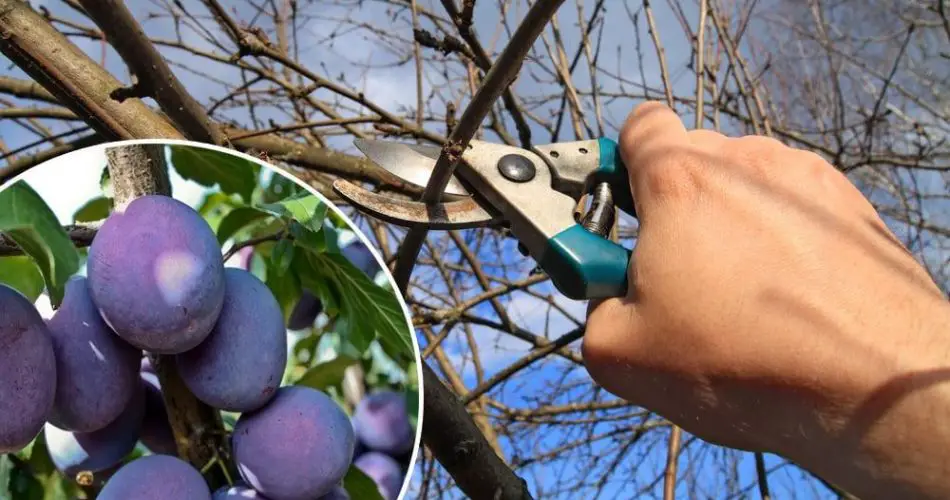
Proper pruning is essential to ensure your plum tree produces healthy, abundant fruit in the coming year. By following these simple steps and avoiding common mistakes, you can help your tree thrive.
Steps for Pruning Plum Trees in Autumn
- Forming Strong Skeletal Branches
- Create tiers of two to three strong branches per level.
- Ensure 10-15 cm of spacing between branches in the same tier and 35-40 cm between tiers.
- This structure improves lighting and ventilation in the crown, promoting healthier growth and better fruiting.
- Removing Diseased and Weak Branches
- Cut out all dry, diseased, weak branches, as well as those that grow inward or cross over each other.
- This prevents the crown from becoming too dense, allowing more light and air to reach the fruit.
- Tailoring Pruning to the Tree’s Fruiting Pattern
- For one-year-old branches: Slightly shorten them to stimulate new growth if your tree fruits on these.
- For spurs (short fruiting branches): Cut them back to about 1/7 of their length to encourage development and productivity.
Common Mistakes to Avoid
- Excessive Pruning: Removing too many branches can weaken the tree and reduce its yield.
- Skipping Weak or Diseased Branches: Neglecting to remove these can lead to disease spread and crown thickening, affecting fruit quality.
- Irregular Crown Shape: A dense or uneven crown prevents light and air from reaching all parts of the tree, leading to uneven fruit ripening and potential disease.
Why Proper Pruning Matters
Pruning ensures your plum tree is well-shaped, healthy, and optimized for producing a bountiful harvest. By following these steps, you’ll create an open, ventilated crown that promotes even ripening and reduces the risk of disease.
Take care of your plum tree this fall, and it will reward you with delicious fruit next year!
Show Comments