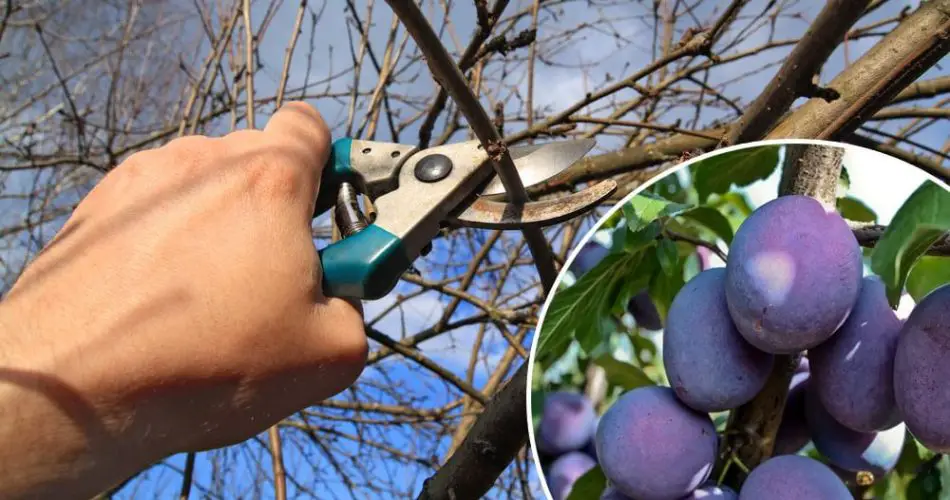
Pruning a plum tree in autumn is a vital practice that contributes to robust growth and abundant fruiting. Expert guidance on correct pruning techniques can help maximize your harvest while avoiding common mistakes that could hinder tree health and fruit quality.
Essential Steps for Autumn Plum Pruning:
Autumn pruning of plum trees focuses on establishing an optimal branch structure that supports healthy fruit development. Here are key principles to follow:
- Formation of Skeletal Branches: Create a framework of skeletal branches arranged in tiers, with two or three strong branches in each tier. These branches should be spaced approximately 10-15 cm apart horizontally and 35-40 cm vertically between tiers. This spacing allows for adequate light penetration and air circulation, crucial for fruit quality.
- Remove Weak and Inward-Growing Branches: Eliminate any weak, dead, or branches growing inward towards the center of the tree. These branches can impede healthy growth and reduce fruit production.
- Consider Fruit-Bearing Method: Understand how your plum tree bears fruit:
- If fruits develop on one-year branches (whips), prune them lightly to encourage new growth and maintain vigor.
- For trees that bear fruit on spurs (short, stubby branches), prune them back to about 1/7 of their length to stimulate active growth and fruiting.
Avoiding Common Pruning Mistakes:
To ensure your plum tree thrives and yields a plentiful harvest, avoid these common pruning errors:
- Over-pruning or excessively cutting back branches, which can weaken the tree and reduce fruit production.
- Neglecting to prune regularly, leading to overcrowded branches and poor fruit quality.
By following these expert tips for autumn pruning, you can optimize the health and productivity of your plum tree, ensuring it rewards you with delicious, large, and sweet fruits season after season.