aring for potatoes requires special attention, especially when it comes to watering during hot weather. Experienced gardeners understand that the watering needs of potatoes depend on the type of soil they grow in.
Watering in Sandy Soil
If your garden features sandy soil, it’s crucial to adjust your watering approach. In dry heat conditions, proper watering is vital for achieving a high yield.
Key Watering Guidelines
- Regular Watering: In high temperatures, establish a routine of watering potatoes. A common recommendation is to provide about 3 liters of water under each bush once every 10 days.
- Stop Watering When Leaves Dry: Cease watering when the leaves have dried out, indicating that you can begin harvesting in about a week.
Best Timing for Watering
Many gardeners agree that no plant, including potatoes, should be watered during the day in hot weather. If you must water early in the morning, do so before the sun rises to allow moisture to soak into the soil. Avoid letting drops form on the leaves, as this can harm the plants.
- Ideal Timing: The best time to water potatoes is in the evening, after the sun has set. Focus on watering the middle of each bush while avoiding wetting the tubers and roots.
Water Temperature Matters
Using cold water during hot weather is a mistake; aim for warm water around +23-25°C. Additionally, it’s advisable not to use tap water for watering potatoes.
Prevent Water Runoff
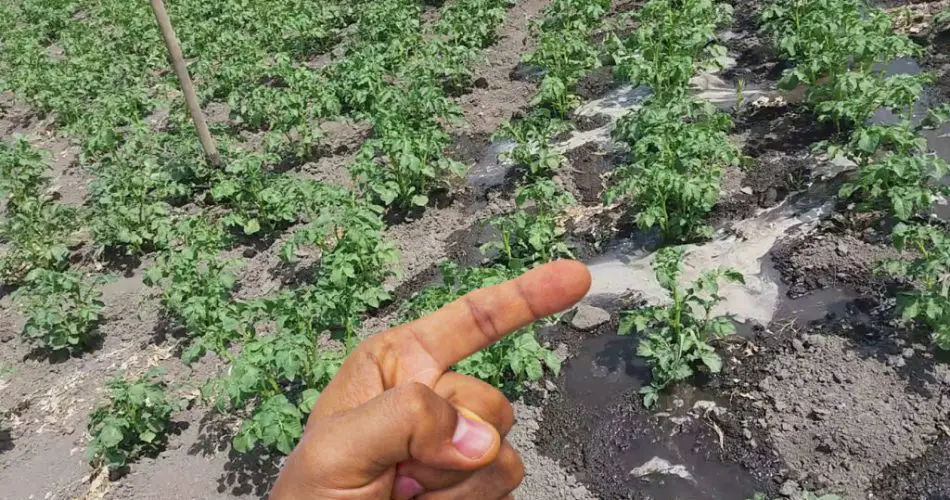
Avoid letting water spill over the site. Instead, water gradually to give the roots time to absorb moisture.
Summary of Recommendations
- In relatively cool weather, potatoes can be watered once a week.
- In hot weather, water potatoes twice a week, maintaining the same volume of water.
- Observe the condition of your potato plants and note when flowers begin to appear. This indicates the need for increased moisture, as delaying or insufficient watering can lead to a loss of up to a third of the crop.
By following these guidelines, you can ensure that your potatoes thrive even in the heat.