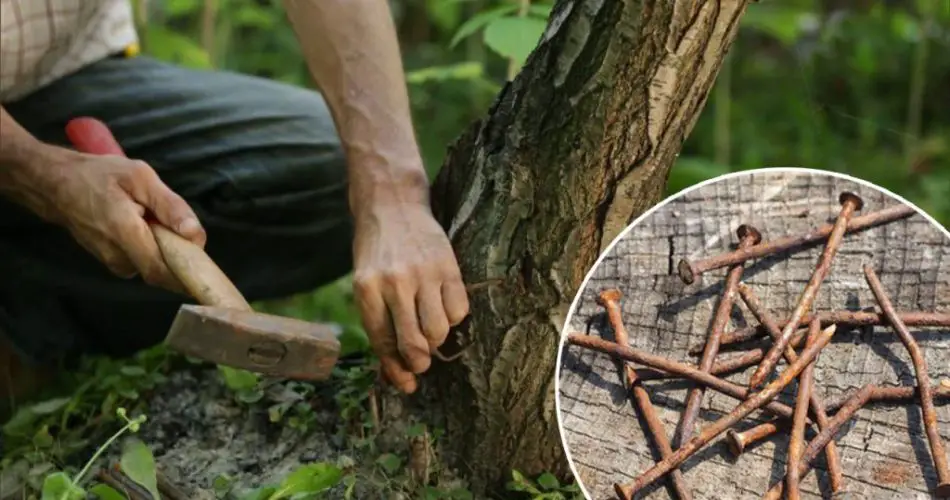
Fall garden care involves more than just harvesting and preparing trees for winter; it also includes techniques that can boost your yield. One such unconventional method is hammering rusty nails into the trunks of fruit trees. While this approach generates mixed opinions, many gardeners continue to use it. Let’s explore whether it truly benefits trees and how to properly carry out this practice.
Why Use Rusty Nails?
The primary reason for driving rusty nails into fruit trees is to address iron deficiency in the soil. Iron is a crucial element for various biochemical processes in plants. When there is a lack of iron, trees grow slower, leaves turn yellow, and yields decrease. Rusty nails, as they oxidize over time, release iron into the tree, helping to restore this important nutrient. Additionally, the slight damage to the tree’s trunk is believed to stimulate growth and fruiting.
How to Properly Drive Nails into Trees
To achieve the best results, it is important to follow these guidelines:
- Choice of Nails: Use old, rusty nails, as they rust faster and provide iron more effectively than fresh metal.
- Depth and Angle: Hammer the nails in at a 45-degree angle to a depth of 2-3 cm.
- Placement: The optimal height for hammering nails is about 60-70 cm from the ground.
- Number of Nails: Use 2-3 nails for each tree.
- Timing: The best time to drive nails is during late fall or early spring, when the tree is in a dormant state.
Advantages and Disadvantages of the Method
Advantages:
- Simplicity and accessibility: The method is easy to carry out and requires minimal resources.
- Increased yield: It can potentially improve the yield without relying on chemical fertilizers.
- Stimulated tree growth: Rusty nails may encourage growth and fruiting.
Disadvantages:
- Lack of scientific evidence: There is no definitive scientific proof supporting the effectiveness of this method.
- Risk of damage: Improper hammering can cause harm to the tree’s trunk.
- Infection risk: The wounds created by nails can become entry points for diseases.
Conclusion
Hammering rusty nails into fruit trees is more of a folk remedy than a scientifically proven practice. While some gardeners swear by its effectiveness, there’s no conclusive scientific backing. If you decide to try this technique, be sure to follow the correct guidelines and monitor the tree’s condition carefully.
Alternatives for Improving Tree Health and Yield
There are more reliable methods to enhance tree health and increase fruit yield, including:
- Regular mineral fertilization.
- Treatment with iron sulfate.
- Mulching around tree trunks.
- Proper pruning techniques.
Approach garden care responsibly, and focus on proven methods to ensure the health and productivity of your trees. A healthy tree is the foundation of a bountiful harvest!