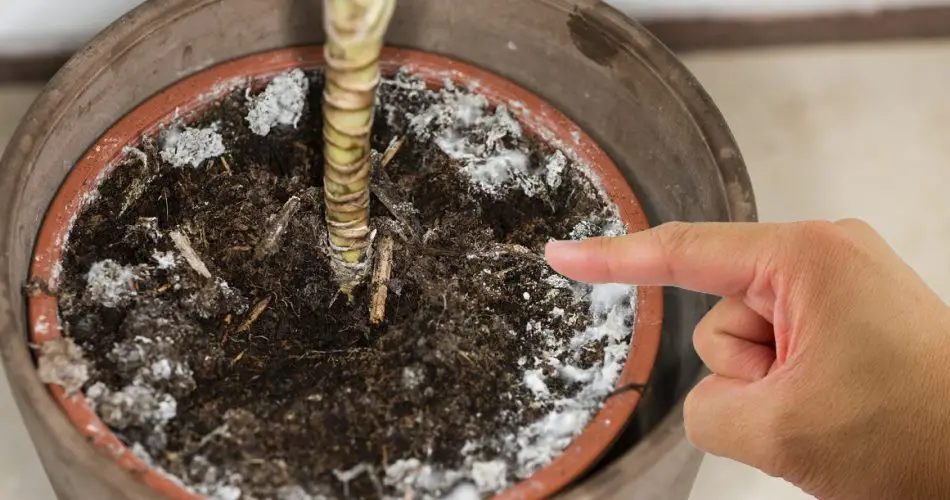
As cold weather sets in, the air in your home can become both cool and damp, creating ideal conditions for mold to thrive. Flowers placed on the windowsill are especially vulnerable, with mold often appearing on the surface of the soil as a white plaque or mold growth.
Types of Mold
There are two main types of mold that can affect plants:
- White mold
- Black mold
The Danger of Mold
Mold is a plaque formed by fungal spores that spread rapidly under favorable conditions. In flower pots, the warm and moist soil provides the perfect environment for these spores to take hold, with white mold being the most common.
White mold is especially dangerous for both plants and people. It creates a dense layer on the soil’s surface, blocking oxygen and disrupting the acidity and mineral composition of the soil. This deprives the plants of essential nutrients, causing them to wilt, dry out, and potentially suffer from root rot due to excess moisture. Left unchecked, mold can lead to the death of your flowers.
Causes of Mold Formation
The primary cause of mold is excess moisture. Other contributing factors include:
- Lack of drainage or small drainage holes in the pots
- Poor-quality water
- Excessive watering
- High humidity levels in the home
How to Get Rid of Mold
If you notice mold on your plants, it’s important to act quickly:
- Remove the top layer of infected soil from the pot.
- Disinfect the remaining soil by spraying it with a lemon solution (1 tsp. lemon juice or a pinch of citric acid in 1 cup of water) or a potassium permanganate solution. These solutions help neutralize mold spores.
- Replace the removed soil with fresh, bactericidal material. Add crushed wood, activated charcoal, or sphagnum moss to the new soil, as these act as natural mold inhibitors.
- Water the flowers with a fungicidal solution. For example, dilute 15 drops of “Fitosporin-M” in 1 liter of water and use this to water your plants.
For a more permanent solution, consider transplanting your houseplant into a new pot with fresh soil, as this is the most effective way to eliminate mold for good.
Mold Prevention
As always, prevention is better than cure. To prevent mold from appearing in the first place, take these steps:
- Plant flowers in pots with proper drainage holes.
- Use materials like expanded clay or crushed brick at the bottom of pots for better drainage.
- Disinfect the soil before planting by baking it at 200°C for a few hours.
- Water your plants with a potassium permanganate solution to prevent mold spores.
- Add crushed charcoal or sphagnum moss to the soil to improve its structure and prevent fungal growth.
- Cover the soil surface with expanded clay to reduce moisture build-up.
- Water the plants with settled or purified water only when the soil is dry.
- Loosen the soil regularly to improve air circulation.
- Ventilate the room frequently to reduce humidity.
- Maintain an optimal temperature for your plants to thrive.
- Install a special grow light on your windowsill to provide additional light.
- Feed your plants with wood ash to protect them from infections.
- Wash your windows and window sills regularly, as they can harbor fungal spores.
By taking these preventive measures, you can keep your plants healthy and mold-free all year long.