Autumn is an excellent time for planting grapes, as the vines can establish their roots before the winter frost sets in. However, to ensure successful growth and a bountiful harvest, it is crucial to follow the right methods and pay close attention to detail.
Choosing Healthy Seedlings
The quality of the seedlings plays a vital role in the success of grape cultivation. When selecting seedlings, focus on these key aspects:
- Root system: Look for well-developed roots that are at least 20 cm long, free of damage or rot.
- Stem: Ensure the stem is straight, without cracks or bruises, and has a minimum diameter of 5 mm at the grafting site.
- Leaves: Check for healthy leaves with no blemishes or signs of disease.
Preparing the Planting Pits
Proper preparation of the planting pits is essential for healthy vine growth.
- Dimensions: Dig holes measuring 60–70 cm wide and 40–50 cm deep.
- Drainage: Add a layer of gravel or stones to the bottom of the pit for drainage.
- Fertile soil: Mix the soil with compost or humus to enrich it before filling the pit.
Planting Process for Grape Seedlings
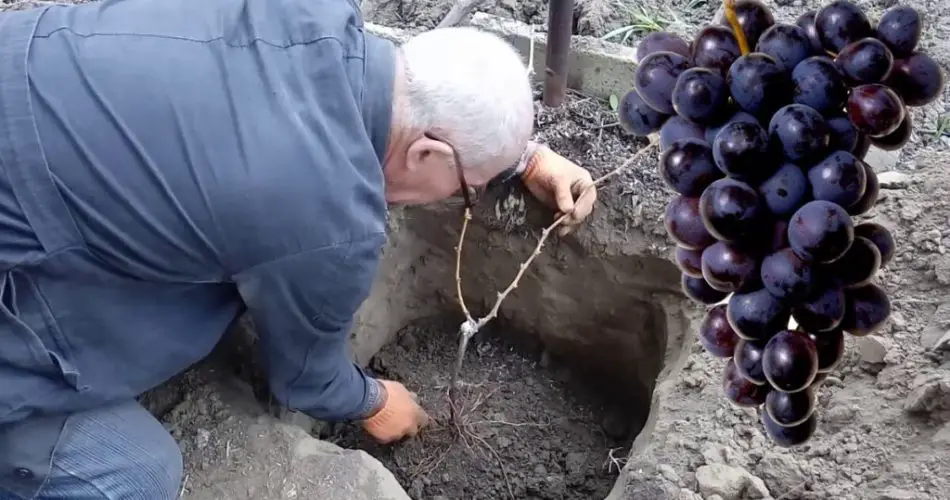
Planting grapes involves several important steps:
- Trim the roots: Cut the roots to a length of 10–15 cm, then treat them with potassium permanganate or clay to prevent infections.
- Position the seedling: Place the seedling in the pit with the grafting site level with or slightly above the ground.
- Fill the pit: Cover the roots with soil, lightly compacting it.
- Form a watering basin: Shape a small earthen ring around the stem to hold water.
- Water thoroughly: Water the seedling generously to ensure proper soil contact with the roots.
- Cover the seedlings: Protect young vines from frost by covering them with leaves or other insulating materials.
Caring for Young Grapevines
Proper care during the first year is critical for the survival and health of your grapevines:
- Watering: Water weekly in the spring and reduce to monthly during the growing season.
- Fertilizing: Apply fertilizer in spring before flowering and again after harvest.
- Pruning: Prune the vines in early spring, removing diseased, dry, or weak stems to promote healthy growth.
- Disease prevention: Regularly inspect for signs of disease or pests and treat with appropriate measures.
Common Mistakes to Avoid
To ensure success, steer clear of these common errors:
- Using damaged seedlings: Grapevines with rotten roots are weak and prone to disease.
- Improper planting depth: Planting too deep or too shallow can hinder proper growth.
- Skipping post-planting watering: Watering is crucial for establishing roots.
- Lack of winter protection: Without shelter, young vines may succumb to frost.
- Incorrect pruning: Over-pruning can reduce yields and weaken the vine.
By choosing high-quality seedlings, preparing the soil correctly, and following these guidelines, you can establish a healthy vineyard and enjoy a delicious harvest of grapes.
Here’s to a successful planting season and a fruitful future for your vines!