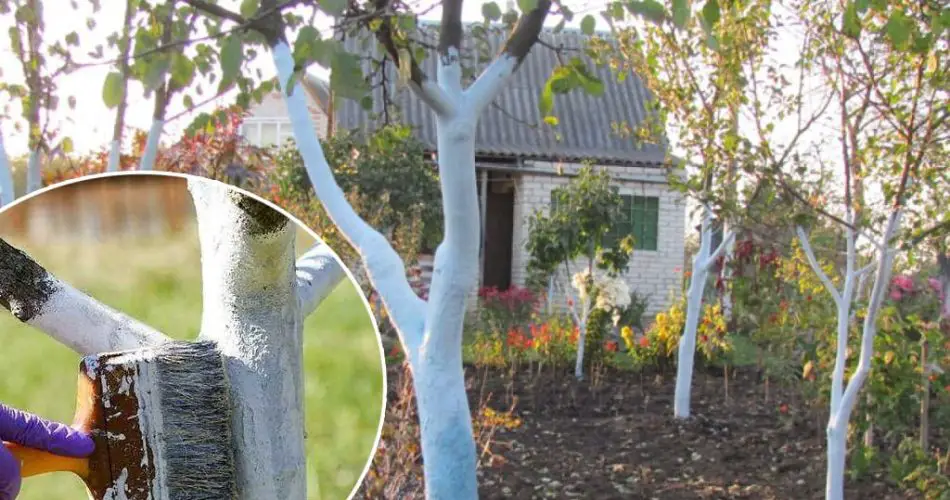
Autumn brings significant changes in gardening, and one crucial procedure is the whitewashing of fruit trees. This article explains why this process is essential and provides detailed instructions for proper implementation.
Why Whitewashing Is Important
Young tree seedlings require special care and should generally not be treated with whitewash. Neglecting this procedure, however, can put them at risk of severe damage or death.
Whitewashing offers several benefits:
- Protection from Frost: It shields the thin bark of trees from cold temperatures.
- Defense Against Rodents: It helps deter rodents from damaging the trees.
Maintaining the health and productivity of your garden relies on these protective measures.
Preparing for Whitewashing
Before applying the whitewash, ensure the trees are adequately prepared:
- Disinfect: Spray the trees with a surface disinfectant 14 days prior to whitewashing. This step helps clean the tree bark and ensures better adhesion of the whitewash.
How to Whitewash Trees
To prepare the whitewashing mixture, you’ll need:
- 1 kg of slaked lime
- 1 kg of tobacco dust
- 200 grams of copper sulfate
- 100 grams of household soap
Mix these ingredients thoroughly and let the solution sit for 4 hours before application.
For added protection against rodents, consider adding 1 liter of laundry detergent to the mixture. The scent of the detergent acts as a repellent.
Applying the Whitewash
- Application: Once the mixture is ready, apply it to the trunks and larger branches of the trees. This will ensure they are protected from frost and pests throughout the winter.
Benefits of Autumn Whitewashing
This process will safeguard your trees until the next autumn. Proper whitewashing helps in:
- Preventing Frost Damage
- Repelling Rodents
- Ensuring Healthy and Productive Trees
By taking these steps, you’ll be able to enjoy a thriving garden with healthy fruit trees, leading to a bountiful harvest and beautiful fruits.