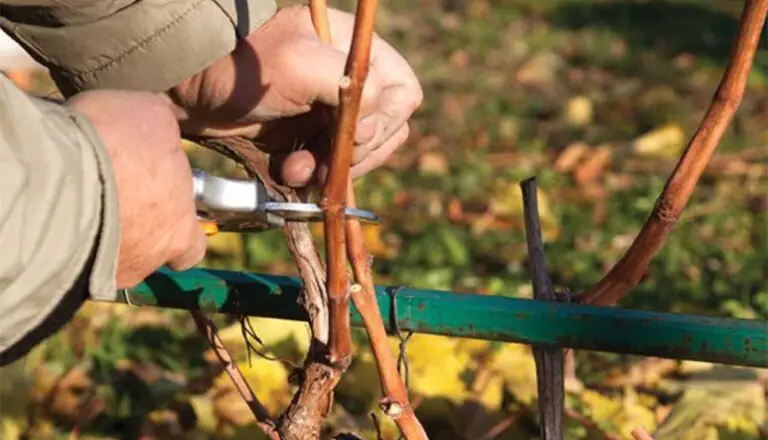
In autumn, it’s essential to prune the vine. This is one of the important tasks for grapevines during the fall season. We’ll guide you through the process of pruning grapes both in the spring and in the autumn.
Spring Pruning
When you prune the grapevine in spring, a pasoka (sap flow) forms at the site of the cut. If too much sap leaks out, it can cause the upper branches to dry out. To avoid this, it’s better to prune the vine in autumn.
For spring pruning, make sure to cut the branches when the roots are still dormant, not yet having “woken up” after the winter sleep.
When pruning, make horizontal cuts so that the sap flows downward and does not accumulate in the plant. After cutting, it’s important to treat the cut areas with boric acid or oil. You can also use suric paint or chalk to seal the cuts and protect the vine.
Autumn Pruning
Autumn pruning is crucial, but it must be done carefully. If done too early or incorrectly, it can leave the bush too weak to survive the winter months.
Prune the branches only after the leaves have completely fallen. This ensures the plant is in a state of dormancy and will not lose vital energy.
When to prune? Aim to do the pruning when the outdoor temperature is around 5°C (41°F), and the humidity is at an optimal level for the vines. This will help the plant conserve its energy and prepare for the colder months ahead.
With proper autumn pruning, your grapevines will be better equipped to withstand the winter and flourish in the coming seasons.