Ready for a bountiful harvest of apples? Autumn pruning is crucial to maintaining a healthy tree and ensuring abundant fruiting next year. By properly pruning your apple tree this fall, you can promote strong growth, improve fruit quality, and extend the tree’s life. Here’s how to do it right!
Why Autumn Pruning Matters
Autumn is the best time to care for your apple trees, and pruning plays a significant role in ensuring their health and future productivity. Here’s why autumn is the optimal time for pruning:
- Minimal Stress: After the leaves fall, the tree’s life processes slow down, so it experiences less stress during pruning.
- Better Visibility: With no leaves, the branches are clearly visible, making it easier to decide which ones to prune or remove.
- Disease Prevention: Removing diseased, damaged, and broken branches helps prevent the spread of infections and ensures better tree health.
- Winter Preparation: Proper pruning improves ventilation in the crown, reducing the risk of fungal diseases during the winter months.
Types of Autumn Pruning
There are several types of autumn pruning, each targeting different aspects of tree care:
- Sanitary Pruning: Removes dry, diseased, damaged, and broken branches, as well as any shoots growing inside the crown that block air circulation.
- Formative Pruning: Shapes the tree’s crown to promote even lighting and ventilation—essential for healthy growth.
- Thinning Pruning: Reduces the density of the crown to ensure better fruit development and higher-quality apples.
- Rejuvenating Pruning: Used on older trees to stimulate the growth of young shoots and restore fruit production.
Pruning Apple Trees by Age
The approach to pruning varies depending on the age of your apple tree:
- Young Apple Trees: Focus on forming the correct crown and establishing a strong framework.
- Mature Trees: Combine sanitary, formative, and thinning pruning to maintain a healthy structure.
- Old Trees: Rejuvenating pruning helps stimulate growth and restore fruiting. This process may take place over several years.
When to Prune?
The best time for autumn pruning is from late October to early November, after the leaves have fallen but before frosts set in. This timing ensures the tree has enough time to recover before winter, while avoiding damage from early frosts.
Tools and Materials Needed
To prune your apple trees, you’ll need the following tools:
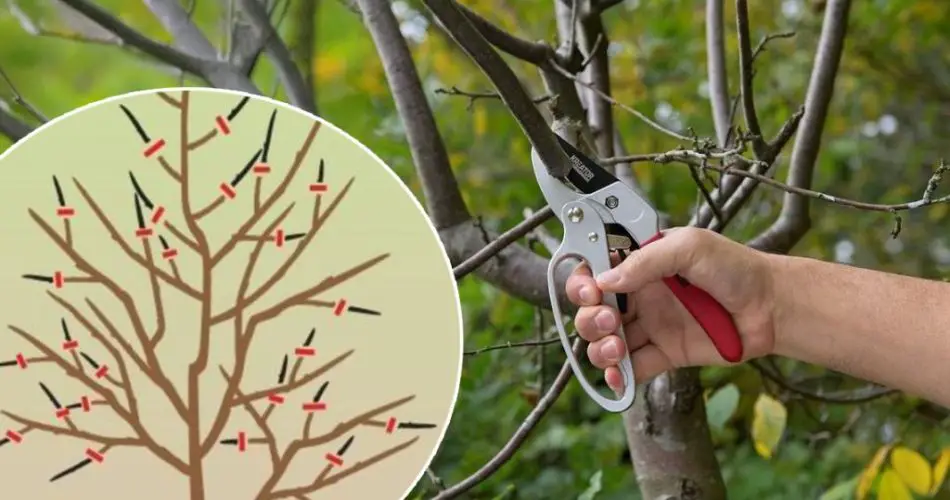
- Secateurs (for small branches)
- Branch cutter (for larger branches)
- Pruning saw (for thicker branches)
- Garden wax (for sealing large cuts)
- Disinfectant solution (e.g., 3% copper sulfate solution for cleaning tools)
Pruning Technique
- Make cuts at a 45-degree angle to allow water to drain off and prevent disease.
- Large wounds should be sealed with garden wax to prevent infection.
- Disinfect your tools before and after each use to avoid spreading diseases.
Important Tips for Successful Pruning
- Avoid pruning during the growing season, especially when the tree is flowering or fruiting.
- Don’t remove more than one-third of the tree’s crown at one time.
- For young shoots, trim them back to one-third of their length.
- For older branches, cut them back to healthy wood, removing them completely.
Conclusion
Autumn pruning is an essential step in caring for your apple trees. When done properly, it will increase your yield, improve fruit quality, and extend the life of the tree. If you’re unsure how to proceed, consider seeking advice from an experienced gardener or referring to trusted resources.
Remember: healthy, well-pruned trees are the key to a rich harvest of tasty, nutritious apples next year!