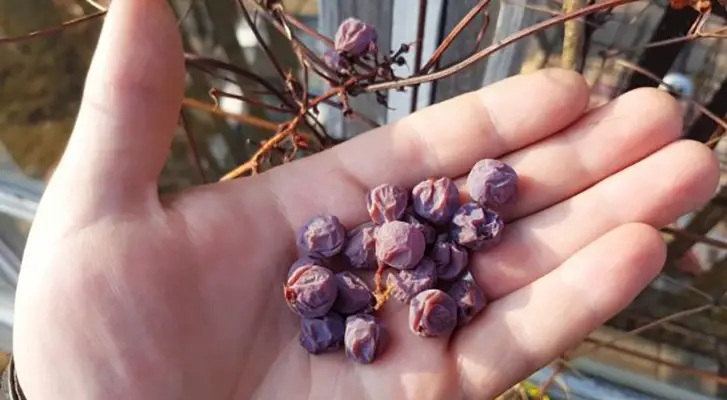
It’s a common problem that grapes sometimes begin to dry out before they fully ripen. Understanding the cause of this phenomenon is the first step in addressing it. Preventive measures can help protect your crop and avoid future issues. Here are the main reasons why grape berries may dry prematurely:
1. Sunburn
Grapes are heat-loving plants that thrive in the sun, but excessive heat can cause harm. When the temperature consistently stays around 30°C (86°F), the berries can suffer from sunburn. This results in gray spots on the fruit. While such spots can sometimes be mistaken for a disease, if they are only on the sunny side of the grapes, they are most likely a sunburn.
How to Protect Grapes from Sunburn?
Unfortunately, it’s not always possible to save all the affected berries. However, you can try removing or relocating the damaged ones. For prevention, consider wrapping the grapes in white paper or covering them with tulle. Don’t forget to ensure ventilation around the berries to prevent disease development.
2. Bacteriosis
Bacteriosis is a disease that often resembles sunburn, but the spots usually appear on the lower clusters of grapes. As the berries grow to about 1 cm in size, light spots appear, which eventually change color and spread. This disease is challenging to control, and once the berries are infected, they cannot be saved. However, it’s essential to prevent the disease from spreading to healthy fruit.
For treatment, you’ll need specialized pesticides such as Alatar, Inta-Vir, or Fufanon-Nova. Unfortunately, folk remedies are unlikely to be effective in treating this disease.
3. Leafhopper Infestation
Another common pest that can cause berries to dry is the leafhopper. This pest feeds on the sap of young shoots, which weakens the plant and causes the berries to wither and dry out. Leafhoppers reproduce quickly, laying eggs under the bark, which can cause the shoots to swell.
How to Control Leafhoppers?
If you notice signs of leafhopper damage, remove the affected shoots immediately. In severe cases, it may be necessary to dispose of the affected fruits and shoots. To minimize further damage, treat your plants with pesticides such as Aktara, Fufanon, or Kinmix. Collect the berries early in the morning—around 4 a.m.—as the pest is less active at that time. Unfortunately, folk remedies are generally ineffective against this pest.
By understanding the causes behind premature drying and taking preventive actions, you can protect your grape crop from these issues and ensure better fruit development in the future.