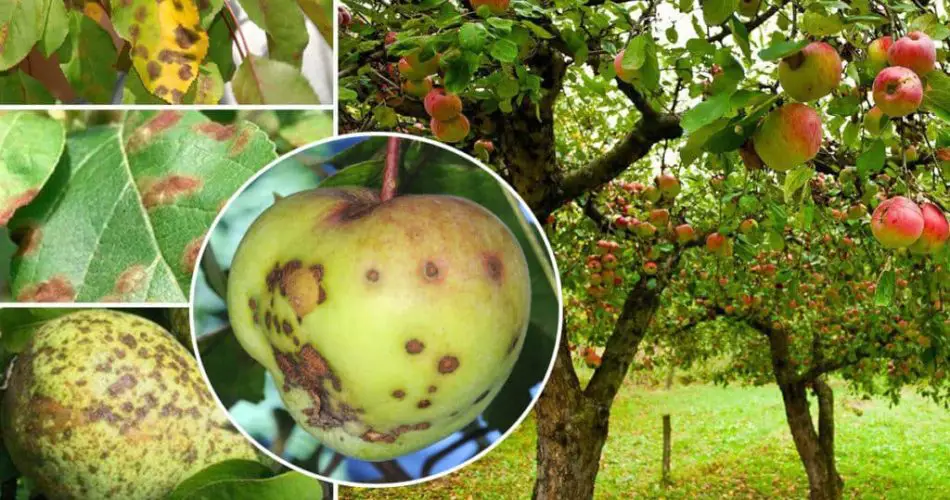
Scab is a prevalent disease that can severely impact apple trees, leading to branch death and the formation of dark spots on the fruit. To effectively combat scab and protect your apple trees, several critical measures should be taken during the autumn months.
Key Steps to Control Scab in Autumn
- Apply Fungicides:
- Start by using fungicides to manage and reduce scab infections. This is an essential first step in controlling the disease and preparing the tree for a healthy growing season.
- Remove Debris:
- Thoroughly remove all fallen leaves and mummified fruits from around the apple tree. These materials can harbor scab spores and contribute to the spread of the disease.
- Ensure that the removed debris is burned or disposed of well away from the garden to prevent re-infection.
- Use Iron Sulfate Solution:
- For effective treatment, prepare a solution of iron sulfate with a concentration of 5%. This can be combined with urea for enhanced efficacy.
- Depending on your mixture, you may also add citric acid, iron sulfate, and liquid soap to the solution. This helps improve the adhesion and penetration of the treatment.
- Spring Considerations:
- Remember that while autumn treatments are crucial, scab management does not end here. In the spring, it’s important to switch to a different fungicide to continue controlling the disease and protect your apple trees effectively.
Additional Tips
- Regular Monitoring: Keep an eye on your apple trees throughout the growing season for any signs of scab reoccurrence.
- Proper Timing: Apply treatments and remove debris before the onset of winter to maximize effectiveness.
Conclusion
Taking these steps in autumn is essential to protect your apple trees from scab and ensure a healthier yield. By applying fungicides, removing infected debris, and using an iron sulfate solution, you can significantly reduce the risk of scab and prepare your trees for a successful growing season. Stay vigilant and proactive with your treatments, and remember to switch your fungicides in the spring for continued protection.
Show Comments