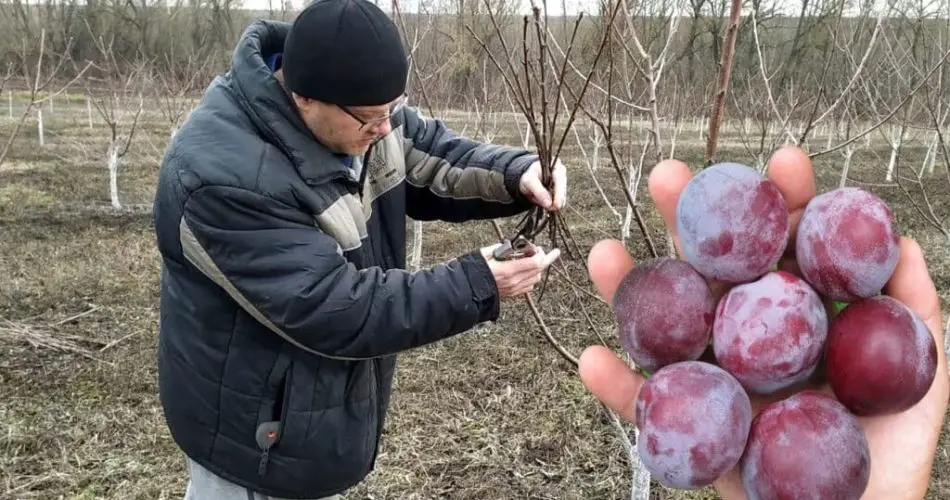
Achieving an exceptional harvest of sweet and juicy plums begins with effective spring pruning. Pruning your plum tree during this season helps to shape a healthy and balanced crown, enhances overall plant health, and boosts fruit size. Proper pruning also prevents issues such as overcrowding, which can make the tree more susceptible to cold damage and affect fruit ripening. Here are the six main rules to follow for successful plum pruning in spring:
1. Follow the Natural Shape of the Tree
- Maintain Balance: Prune the plum tree to align with its natural bushy shape. This approach helps in maintaining a balanced and healthy crown.
- Enhance Health: A well-shaped crown allows better air circulation and light penetration, which are crucial for the tree’s overall health.
2. Remove Damaged and Diseased Branches
- Conserve Energy: Remove any damaged or diseased branches to conserve the plant’s energy and prevent the spread of illness.
- Promote Vigorous Growth: This helps in directing the tree’s energy towards producing healthy new growth and fruit.
3. Eliminate Branches Growing Into the Crown
- Improve Light and Air Flow: Remove branches that grow inward to allow more light and air to penetrate the inner parts of the crown.
- Support Healthy Development: This practice promotes better fruit development and ripening.
4. Trim Top and Side Shoots
- Control Size and Shape: Prune top and side shoots to manage the tree’s size and shape. This helps in maintaining a manageable tree height and shape.
- Encourage Fruit Production: Proper trimming encourages more productive growth and better fruit yields.
5. Cut Branches at a 45° Angle
- Promote Faster Healing: Make cuts at a 45-degree angle to facilitate quicker healing of the wounds.
- Prevent Disease: Angled cuts reduce the risk of disease entering the tree through exposed surfaces.
6. Treat Cuts with an Antiseptic
- Protect from Infection: Apply an antiseptic or wound sealant to the cuts to protect against potential infections.
- Ensure Tree Health: This step helps in preventing diseases from infecting the freshly cut areas.
Additional Tips for Young and Mature Trees
- Young Trees: Prune young plums for the first time when planting, and continue to do so regularly. Focus on forming the crown until the tree is about 15 years old. Avoid cutting young shoots and concentrate on removing dry or diseased branches.
- First 6 Years: During the initial 6 years, cut 60 cm long branches in half and shorten young branches by one-third. Trim one-year shoots above buds that point to the tree’s outer edge to encourage outward growth.
Timing and Technique
- Best Time: Perform pruning in late March to early April, once frosts have passed but before the buds have fully bloomed.
- Sterile Tools: Always use sterile pruning tools to prevent contaminating the plant.
By adhering to these spring pruning rules, you’ll ensure the health and productivity of your plum tree, setting the stage for a bountiful harvest. Proper timing and technique are essential for maximizing your plum yield and maintaining a thriving fruit tree.
Show Comments