Winter planting of onions can give you a head start on the growing season, resulting in quicker growth and higher yields. The ideal time to plant onion sets (small bulbs) is at the end of the harvest season, just as the leaves begin to fall. This timing, combined with proper planting techniques, ensures your onions are ready to thrive in spring.
Why Plant Onions Before Winter?
Planting onions in cold soil (at temperatures of -1°C to +2°C or 30°F to 36°F) encourages the bulbs to establish strong roots before winter dormancy. Compared to spring planting, overwintered onions can produce a 25% higher yield and mature earlier in the growing season.
Key Recommendations for Successful Winter Planting
1. Soil Temperature
Ensure the soil temperature is optimal for planting. If it’s too warm, the onion sets may sprout prematurely. If it’s too cold, they might not establish roots before winter.
2. Seedling Size
Choose onion sets with a diameter of about 1 cm (0.4 inches) or smaller. Larger bulbs are more likely to bolt (produce flowers) rather than develop into plump onions.
Steps to Prepare for Planting
- Soil Preparation
- Clear the planting area of debris.
- Dig and loosen the soil thoroughly.
- Fertilize the soil with compost and wood ash at a ratio of 1 liter (1 quart) per square meter to enrich it with nutrients.
- Create Furrows
- Dig furrows about 3-4 cm (1.2-1.6 inches) deep.
- Space the rows 12-15 cm (5-6 inches) apart to allow room for growth.
Planting Process
- Position the Onion Sets
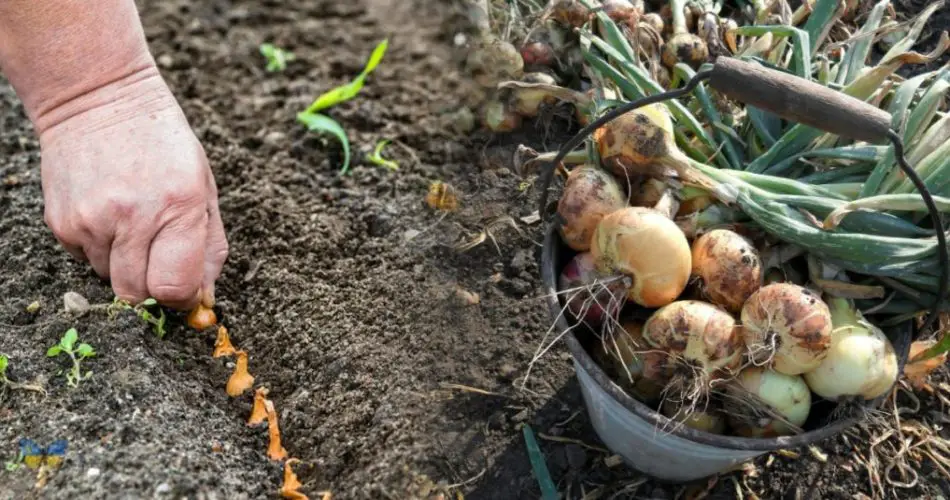
- Place the sets vertically in the furrows with the pointed end facing up.
- Maintain a spacing of 3-4 cm (1.2-1.6 inches) between sets.
- Cover and Insulate
- Cover the sets with soil.
- Add a layer of peat or dry leaves on top to provide additional insulation against freezing temperatures.
Winter Care
- Snow Insulation
- In snowy winters, spread an extra layer of snow over the onion bed to provide natural protection.
- Drainage
- Ensure proper drainage to prevent waterlogging during the spring thaw, as excess moisture can damage the bulbs.
Spring Care and Growth
- Assess Winter Survival
- If winter temperatures stayed above -15°C (5°F), your onions should overwinter successfully. In the case of severe frosts, plant additional sets in spring to compensate for any losses.
- Spring Feeding
- Fertilize with diluted manure or compost tea (1 part manure to 10 parts water) to boost growth.
- Watering
- Water regularly until the bulbs begin to swell. Once the leaves start to yellow, reduce watering to encourage the onions to ripen.
Benefits of Winter Planting
By following these steps, your onions will have a strong start in spring, resulting in a robust, early, and abundant harvest. With the right preparation and care, you’ll be rewarded with plump, flavorful onions grown with ease.