Don’t throw away fallen leaves! Turn them into golden fertilizer for your garden. Learn how to easily make compost from leaves and enrich your garden soil.
Fallen Leaves: A Golden Reserve for Your Garden
Autumn is not just for admiring nature’s golden hues but also for taking care of your garden’s health. The fallen leaves, often seen as waste, are actually a treasure for any gardener. You can turn them into compost, which will become an invaluable fertilizer for your plants.
Why Is Leaf Compost So Good?
- Natural and Ecological: Leaf compost is a 100% organic fertilizer, which is safe for the soil and plants.
- Nutritive: As the leaves decompose, they transform into a rich source of nutrients that are essential for plant growth.
- Improves Soil Structure: Compost makes soil more loose, improving its air and water permeability.
- Protects Against Pests and Diseases: Leaf compost helps introduce beneficial microorganisms into the soil, suppressing pests and pathogens.
How to Make Compost from Fallen Leaves: Step-by-Step Instructions
- Collecting Leaves: Gather leaves from various trees, such as fruit trees, maple, birch, hawthorn, and aspen. Avoid coniferous trees and leaves that are diseased or damaged.
- Preparing the Composter: You need a composter, a container that ensures optimal conditions for composting. You can purchase a ready-made composter or build one using wooden boards.
- Layering: Alternate layers of fallen leaves with soil layers (5-10 cm thick) to maintain the right balance of carbon and nitrogen for composting.
- Moistening: Regularly moisten the compost pile to maintain optimal moisture levels. To speed up decomposition, you can add grass clippings, seedless weeds, or kitchen plant waste.
- Enrichment: To reduce the acidity of leaves, add dolomite flour, chalk, wood ash, or slaked lime to the compost.
- Accelerating the Process: To speed up composting, use EM preparations or water the pile with a nitrogen fertilizer solution (e.g., ammonium nitrate or urea).
- Stirring: Stir the compost regularly to ensure air circulation and promote faster decomposition.
When Is the Compost Ready?
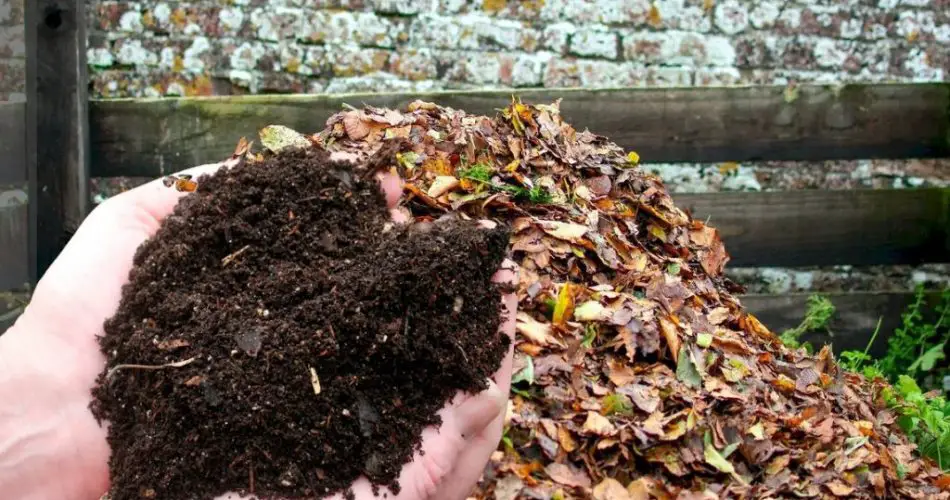
Compost is ready when it becomes dark in color, has a pleasant earthy smell, and crumbles easily in your hands. Typically, the composting process takes 6-12 months.
How to Use Compost?
Once the compost is ready, you can use it to feed all types of plants. Apply it before planting to improve soil quality, or use it as mulch around plants. Leaf compost is a powerful, natural fertilizer that promotes plant growth.
Conclusion
Fallen leaves are not trash but a valuable resource for your garden. Through composting, you can create organic fertilizer that improves soil structure, enriches it with nutrients, and protects your plants from pests and diseases. Don’t hesitate to make leaf compost—it’s easy to make and incredibly beneficial for your garden.
Remember, composting isn’t just about disposing of organic waste, it’s an opportunity to create healthy and fertile soil for your plants. Take advantage of nature’s gifts and start composting today!