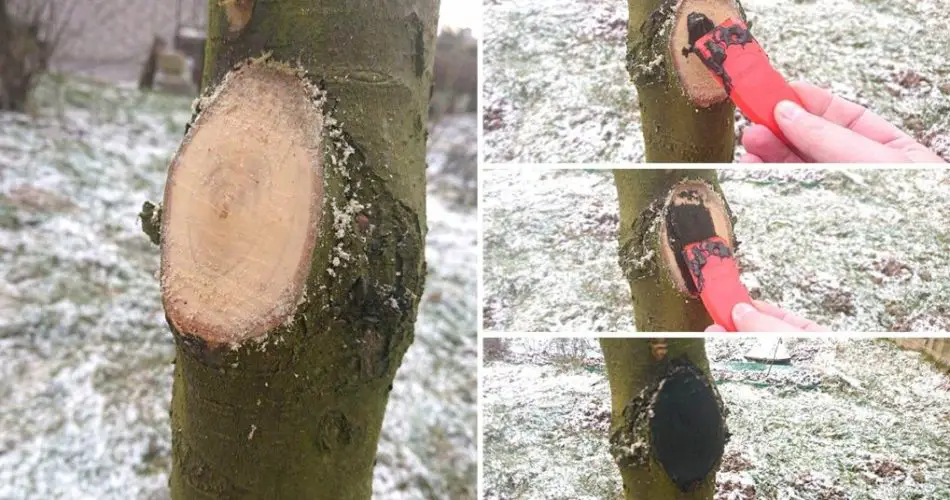
One of the tried-and-true methods for treating damage on fruit trees involves using specialized sealing compounds. Addressing issues like bark damage or trunk cracks promptly is crucial, as neglect can lead to serious problems. Here’s a guide on how to effectively seal and protect these wounds to ensure your trees recover quickly.
1. Clay and Mullein Mixture:
A traditional remedy for treating tree damage involves a mixture of clay and mullein. Combine equal parts of clay and mullein, then apply this blend to the damaged area. Wrap the treated area with a bandage to secure it. If mullein is unavailable, wood ash can be used instead. In this case, mix two parts of clay with one part of ash to create a similar protective paste.
2. Cement Solution:
For larger or more extensive damage, a cement solution can be effective. Cement mortar is particularly useful for sealing substantial cavities. When using cement, there’s no need to wrap the tree; simply apply the mortar directly to the affected area.
3. Avoid Horticultural Lime:
While horticultural lime is sometimes used for treating cuts, it is not the best option for sealing cracks in the trunks of fruit trees. Its properties may not provide the necessary protection or healing support needed for such repairs.
Why Sealing Matters
Using these methods helps prevent disease and aids in the overall health of your orchard. Proper care and timely intervention are essential for ensuring that your trees remain healthy and productive, ultimately leading to a bountiful harvest of delicious fruit.
By addressing cracks and cuts promptly with the appropriate sealing methods, you help your trees recover more efficiently and maintain their vitality.