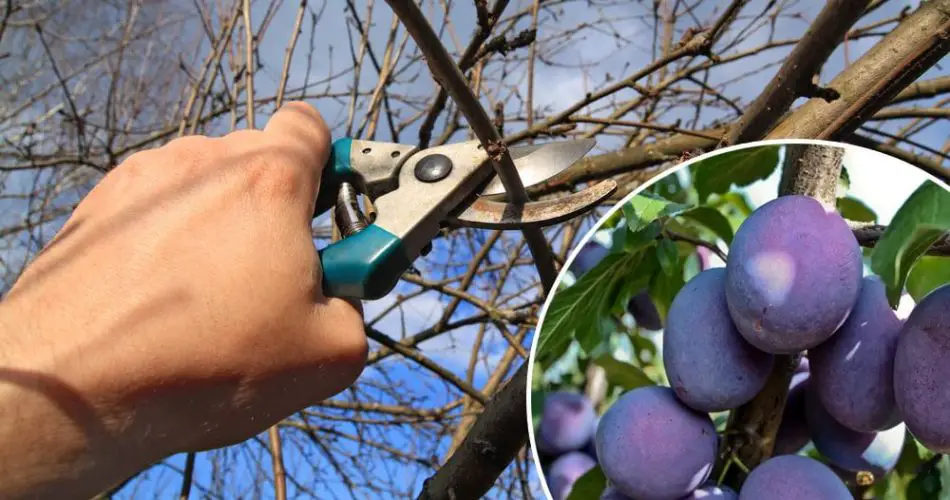
Autumn pruning is a crucial aspect of caring for your plum tree and plays a significant role in ensuring a bountiful and sweet harvest. Proper pruning not only promotes healthy growth but also enhances fruit quality. Here’s how to effectively prune your plum tree in the fall and avoid common pitfalls.
How to Prune a Plum in Autumn
1. Create an Optimal Branch Structure
When pruning plums in the fall, focus on establishing an ideal branch structure. Aim to form skeletal branches arranged in tiers, with each tier featuring two to three strong branches.
- Spacing: Ensure the branches within each tier are spaced about 10-15 cm apart. Maintain a 35-40 cm distance between tiers.
- Remove Weak Growth: Eliminate weak, dead branches, and those growing inward, as they can hinder healthy growth and reduce fruit production.
2. Consider the Fruiting Method
Understanding how your plum tree produces fruit is essential for proper pruning:
- One-Year Branches: If your plum fruits on one-year branches, simply shorten these branches slightly to encourage new growth.
- Spurs: For trees that fruit on spurs, cut them back to about 1/7 of their length. This helps stimulate active growth and improves fruit quality.
Common Pruning Mistakes to Avoid
Avoiding common pruning errors is crucial to maintaining the health of your plum tree and ensuring a productive harvest:
- Over-Pruning: Excessive cutting can weaken the tree and reduce fruit yield.
- Improper Cutting Techniques: Use clean, sharp tools and make cuts at the correct angles to prevent damage.
By following these guidelines, you can help your plum tree produce larger, sweeter fruits and enjoy an impressive harvest. Proper autumn pruning sets the stage for a healthy and fruitful growing season ahead.