Tomatoes are garden plants that don’t require excessive fertilizers, but to achieve tasty and large fruits, proper care is essential at all stages of their development, particularly during flowering.
Key Steps for Caring for Tomatoes During Flowering
- Provide Sufficient Water:
- Water tomatoes 1-3 times a week, depending on soil type and climate.
- Sandy or light soils may require more frequent watering.
- Increase watering during fruiting to ensure the fruits receive enough moisture and don’t crack. Regular watering is crucial, but avoid overwatering.
- Nutrient Supply:
- Ensure tomatoes receive essential nutrients, particularly phosphorus and potassium, which are vital for flower and fruit development.
- Also, include magnesium and boron in your care regimen.
- Gibberellic acid is necessary to enhance the number of fruit sets.
- Use Green Manure:
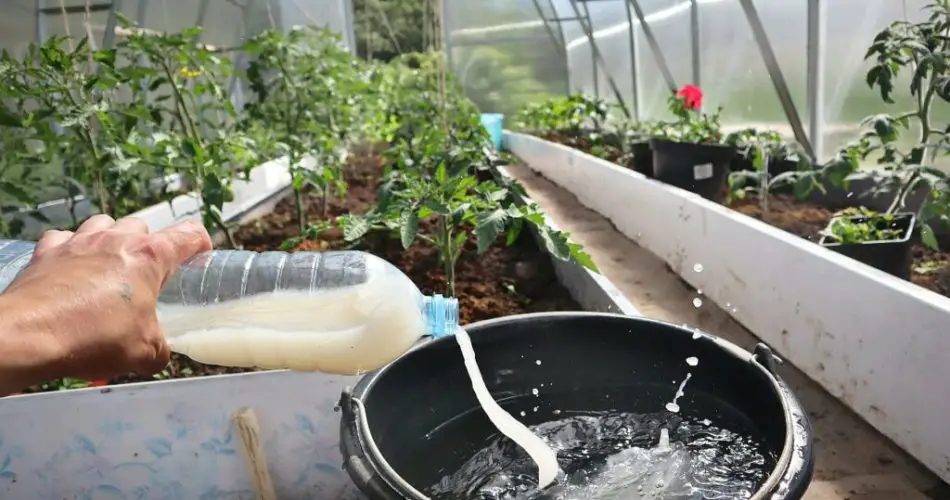
- Start feeding tomatoes with green manure every two weeks until the first fruits appear.
- Green manures provide nitrogen and minerals essential for growth, but use them cautiously as excess nitrogen can negatively affect flowering and fruiting.
- Transition to Potassium Monophosphate:
- Once the first fruits appear, switch to feeding with “Potassium Monophosphate” diluted at 1 tablespoon per 10 liters of water.
- This fertilizer nourishes tomatoes, enhances solubility, strengthens cell walls, promotes root growth, and boosts yield. Apply it either under the root or as a foliar spray.
- Increase Fruit Set:
- To boost the number of fruit sets and prevent them from dropping, spray the product “Ovary” on flower brushes three times: when forming the first, second, and third brushes.
- This stimulant contains gibberellic acid, which supports ovary formation and flower pollination.
By following these tips, you will provide your tomatoes with the necessary nutrients to ensure a high-quality harvest.
Show Comments