Why is Autumn Tree Whitening Needed?
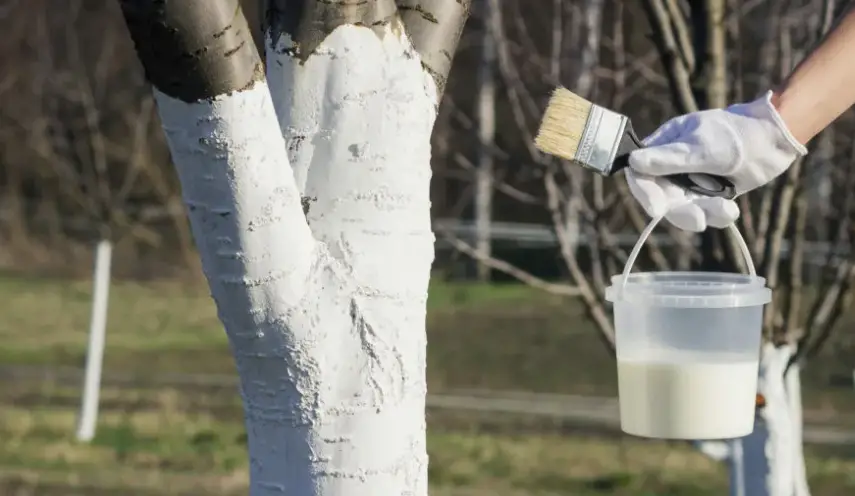
Autumn whitening of trees serves several important purposes, beyond just improving the aesthetic look of your garden. It’s a practical measure that helps protect trees from various environmental factors:
- Sunburn: In the spring, snow can reflect sunlight, concentrating it on the tree’s bark, leading to sunburn. Whitening helps prevent this damage.
- Temperature balance: The whitewash helps create a better balance between day and night temperatures, protecting the bark from extreme fluctuations.
- Protection against pests: The whitening acts as a barrier against harmful pests and diseases.
Recipe for Slaked Lime
To create a whitening solution, you can use slaked lime. The basic recipe is:
- 1 part quicklime mixed with 1.5 parts water. This will create slaked lime (2.5 kg of slaked lime can be used directly).
You can also create an improved solution for added benefits.
Classic Whitening Recipe
For a more effective whitewash, use the following ingredients for a standard 10-liter bucket:
- 300 g slaked lime
- 2.5 g copper sulfate or 500 g iron sulfate
- 100 g carbolic acid (optional but recommended for rodent protection)
Professional gardeners often recommend adding carbolic acid to prevent rodent damage in winter.
When to Apply the Whitewash
The ideal time for whitening is during the junction of the seasons, when the temperature is between 0°C to -3°C. It’s crucial to apply the whitewash before precipitation starts, ensuring the solution stays intact and doesn’t wash away.
By following these simple rules, your trees will be well-protected from environmental stressors and pests, helping them stay healthy through the winter months.