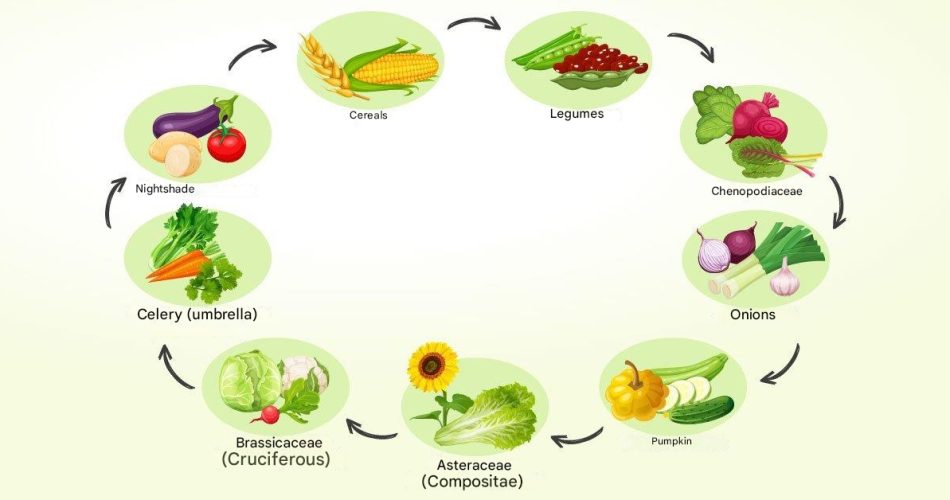
Every gardener needs to understand how to care for their plot effectively and know which plants to grow for optimal results. Here’s a handy cheat sheet for what to do in your garden over the next four years.
Year 1: Bed Preparation and Initial Planting
- Prepare the Beds: This should be done in autumn.
- Soil Enrichment: Add manure and compost to enrich the soil.
- Spring Planting: In the spring, plant spinach and salads. After harvesting these, you can follow up with pumpkins, melons, squash, zucchini, and cucumbers.
- Late Planting: You’ll still have time to sow peas after these crops.
- Autumn Maintenance: In autumn, dig up the beds again and add potassium and phosphorus. You’ll need 70 grams of fertilizer per 1 m².
Year 2: Crop Rotation
- Spring Planting: In the spring, avoid sowing greens in the same areas. Instead, plant potatoes.
- Follow-Up Crops: After the potatoes, sow phacelia, oats, or a mixture of vetch and oats.
- Fall Maintenance: In the fall, dig up the cover crops and apply 70 grams of phosphorus and 50 grams of potassium per 1 m².
Year 3: Root Vegetables and Legumes
- Spring Planting: This year, focus on planting root vegetables, onions, and legumes.
- Soil Management: After harvesting, dig up the ground without applying any fertilizers, as this will be reserved for next year.
Year 4: Cruciferous Crops
- Spring Planting: In the fourth year, plant cruciferous plants such as radish, arugula, and watercress salad.
By following this 4-year plan, you can effectively rotate your crops and enhance soil health, leading to a more productive garden!
Show Comments