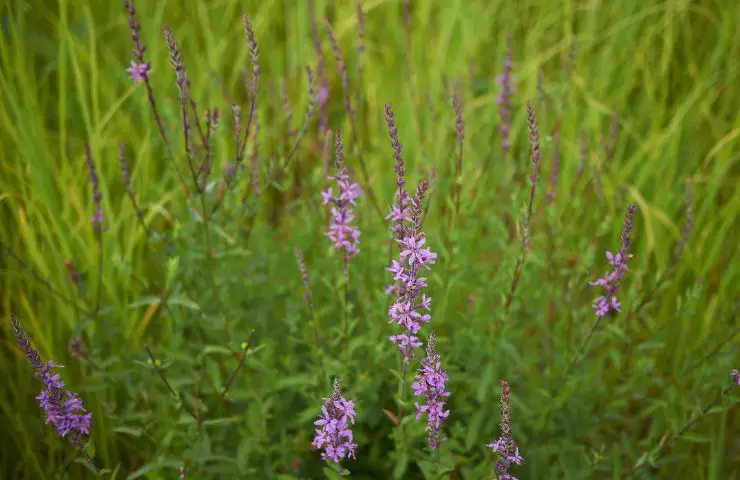
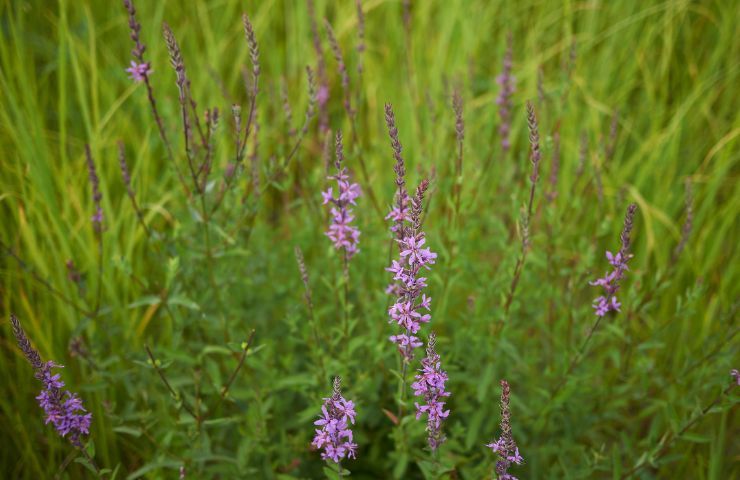
Lythrum salicaria, commonly known as Purple Loosestrife, is a tall, hardy perennial with stunning purple-pink flowers that thrive in moist environments. Native to Eurasia and the British Isles, this plant flourishes along riverbanks, marshes, and ponds, adding vibrant color and attracting bees, butterflies, and moths.
While its delicate flowers make it a beautiful addition to gardens, it can also self-seed aggressively, making management essential. Let’s explore how to successfully grow and care for this ornamental wildflower!
🌱 How to Grow Purple Loosestrife (Lythrum Salicaria)
✔ Planting Time: Best planted in fall or spring.
✔ Ideal Location: Prefers moist soil near ponds, marshes, or garden borders.
✔ Sunlight Requirements: Thrives in full sun, but can tolerate partial shade.
✔ Soil Type: Prefers rich, damp soil that does not dry out.
🌊 If planting near ponds or streams, use a water planter (mesh basket) to control root spread and prevent excessive growth. Avoid fertilized soil, as excess nutrients can promote algae growth in water.
🪴 Caring for Purple Loosestrife
✔ Watering: Keep soil consistently moist, especially in the first growing season.
✔ Deadheading: Remove faded flowers to prevent self-seeding and excessive spread.
✔ Pruning: Cut back dead stalks in early spring before new growth emerges.
✔ Propagation:
- Collect brown, ripe seeds and sow them immediately in pots or garden beds.
- Allow self-seeding but transplant young seedlings as needed.
- Divide mature plants in late autumn or early spring.
💡 Tip: To control the plant’s spread, trim flower heads before seeds mature to prevent unwanted seedlings from taking root.
🌿 Troubleshooting & Common Issues
🔹 Aggressive Growth → This plant self-seeds freely and can become invasive.
✔ Solution: Remove faded flowers before they drop seeds. Pull out unwanted seedlings while they are still small.
🔹 Deep Root Development → Seedlings quickly develop strong roots, making them difficult to remove later.
✔ Solution: Pull up young plants rather than just trimming them.
🔹 Dry Soil → Purple Loosestrife does not tolerate drought well.
✔ Solution: Keep the soil moist at all times, especially during dry spells.
🌸 Fun Facts About Lythrum Salicaria
💜 The genus name Lythrum comes from the Greek word Lythron, meaning blood, referring to both its red-tinged flowers and historical medicinal use for stopping bleeding.
🌿 The species name Salicaria is derived from the Latin word Salix, meaning willow-like, due to its leaf shape resembling that of willows.
🐄 In ancient times, Purple Loosestrife was believed to bring peace among livestock herds, eliminating disputes and conflicts!
🌾 Where to Grow Purple Loosestrife
Lythrum salicaria is a versatile plant that works beautifully in:
✔ Wildflower gardens 🌿
✔ Water gardens & pond edges 🌊
✔ Meadows & marshes 🌾
✔ Cottage & informal gardens 🏡
With minimal care, this low-maintenance beauty can transform your garden into a lush, vibrant paradise filled with color and life. Try growing Purple Loosestrife and watch your garden thrive! 💜✨